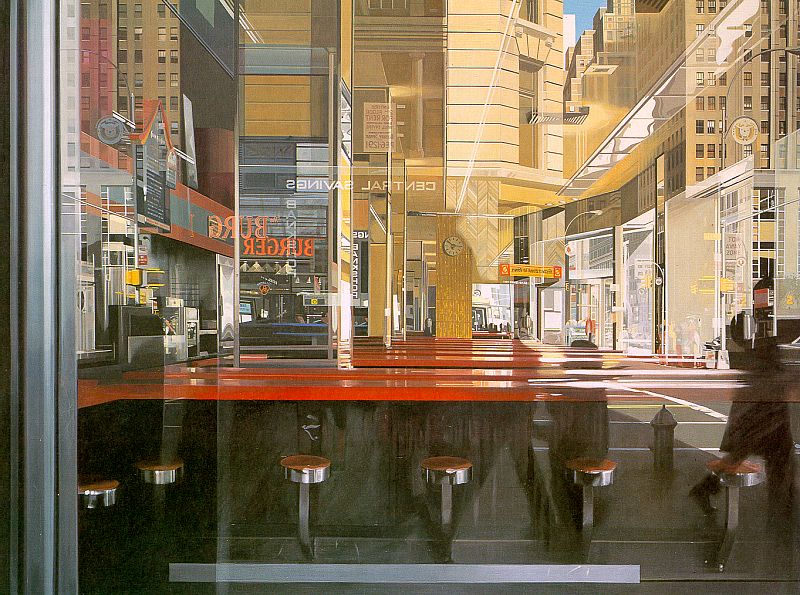
In contemplating why I choose to paint the way I do, I’m not convinced that mystery/ambiguity lacks usefulness in objective reality. I compare them to the way light and dark contrast and define one another, or the times Ayn Rand has found it proper to use symbols of mysticism, (Atlas, God, evil) to accentuate the deeper meaning in her point.
If by ambiguity you simply mean that one aspect of a piece can be understood in more than one way, then ambiguity certainly has value, provided that it contributes to the theme of the piece. In order for this to be the case, I think that the alternate meanings conveyed must be objectively clear, and must be logically consistent with one another. If, for example, it is unclear whether a character in a story is a hero or a villain, until the later when it is revealed that the character’s “evil” actions were actually good in light of new information (take for example Francisco D’Anconia), then this type of ambiguity is rational, and can be very effective. If (as is common in modern stories) the moral worth of the character is never clarified, and one gets the impression that the author himself didn’t know what to think, then this type of ambiguity is irrational, and should not be included in art.
I think that one could say the same thing about mystery. Mystery can be rational when it serves a specific purpose, when it is clear that there is an objective answer to the mystery, and/or when the solution to the mystery is revealed by the artist at a later time or (in the case of visual art) by a specific aspect of the work (there are many examples of this in Atlas Shrugged).
So, to make more precise what I have said previously, ambiguity and mystery in art must be used in a logically consistent way, without any mystical features, and should not be used for their own sake; they should serve a clear purpose in the work.
Would you agree with this formulation?