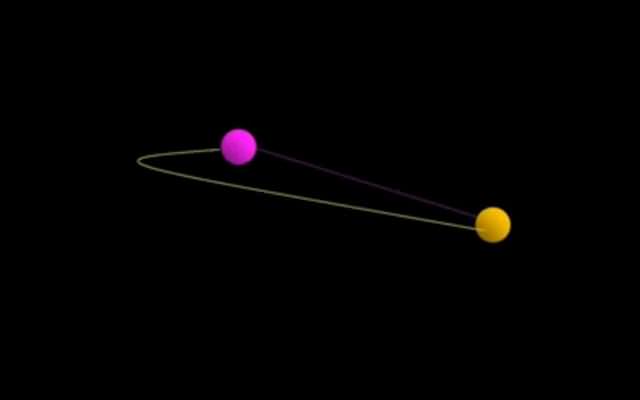
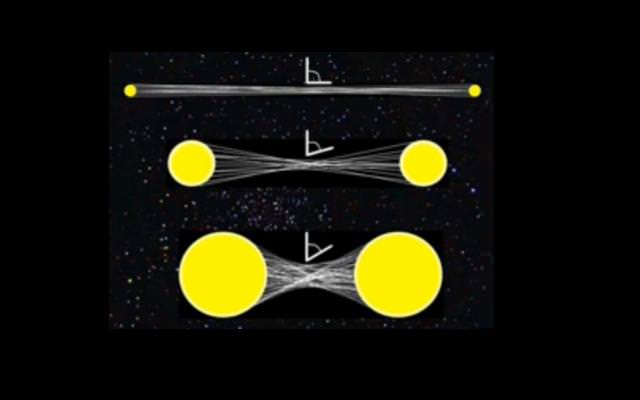
I’d like to propose a physical entity that mediates light and gravity. In this first post I am going to go over very broad strokes, so there will naturally be objections, questions, critiques, etc. I welcome commentary, criticism, and vigorous debate.
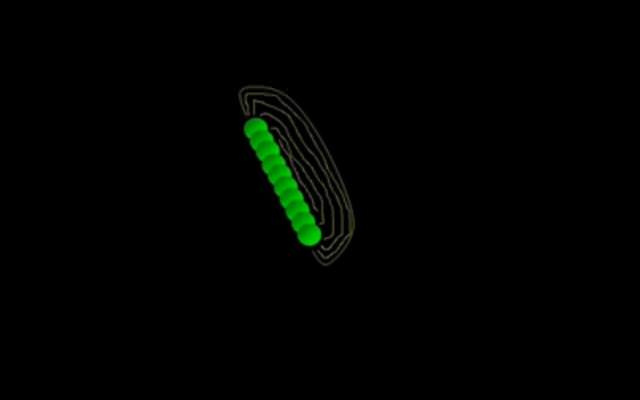
Starting primarily with Young in 1801 and proceeding with Fresnel, Oersted, Faraday, and culminating with the mathematical synthesis of Maxwell in 1864 a coherent description of light’s behavior was developed. The familiar 2D transverse plane waves of Maxwell’s equations indicate an oscillatory behavior of two entities in an antiparallel arrangement around a common axis. This is often illustrated by superimposing perpendicular graphs of the magnitude of the observed behavior vs. distance from some source. Essentially the mathematical picture looks like this:
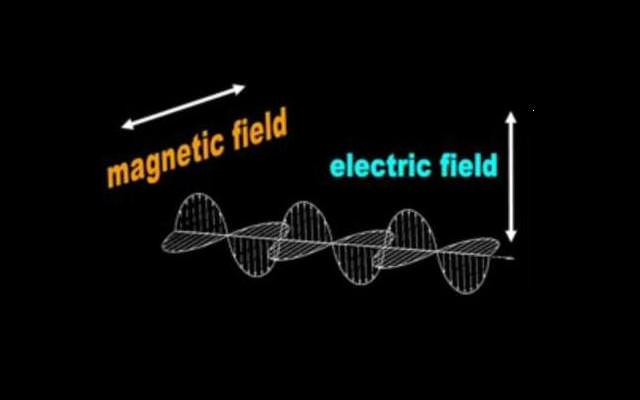
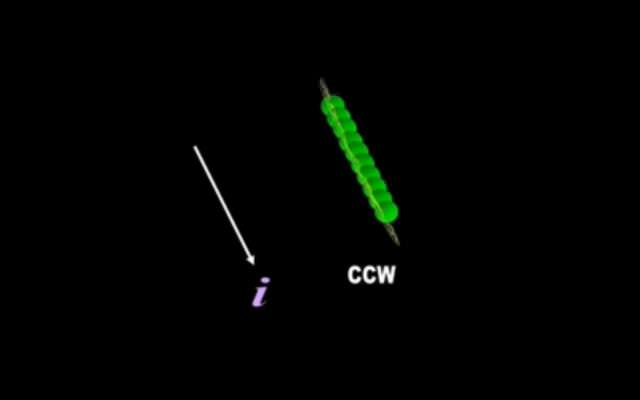
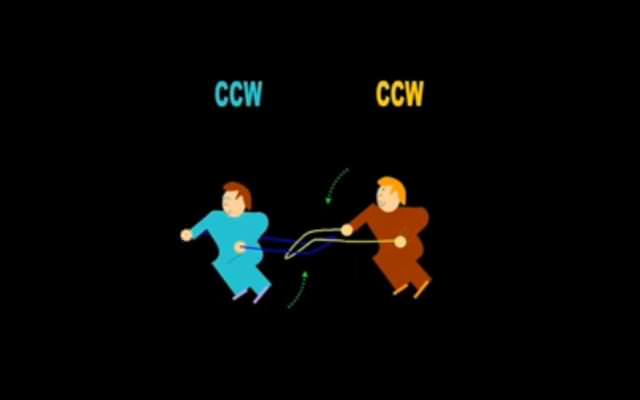
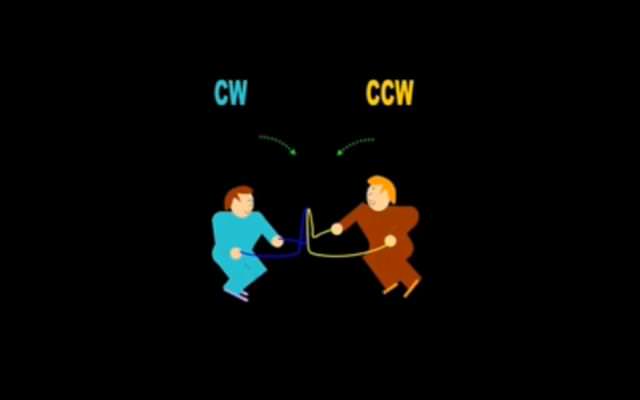
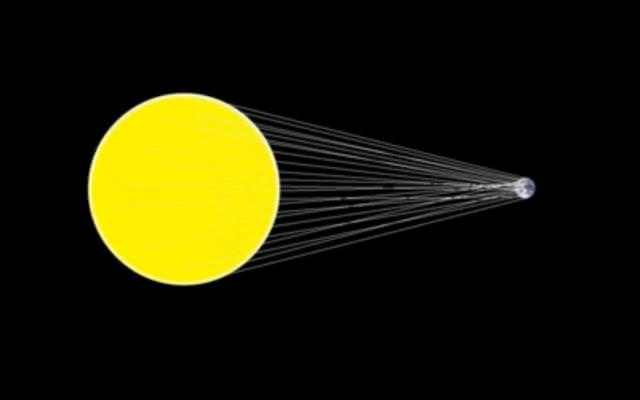
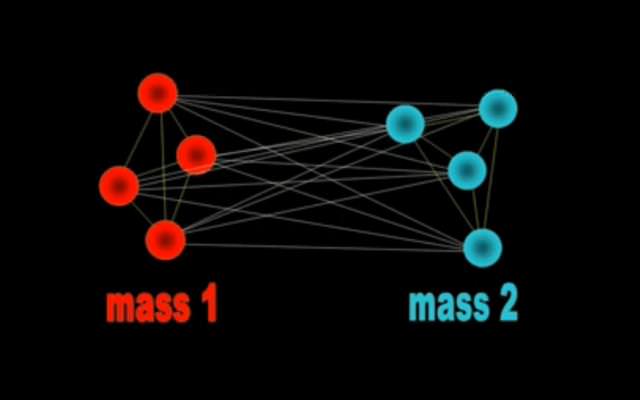
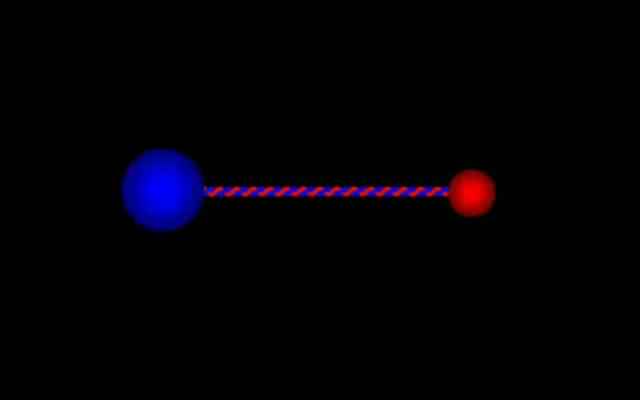
If this is what is mathematically described, the question becomes what physical entity simply justifies the described behavior? This physical structure is consistent:
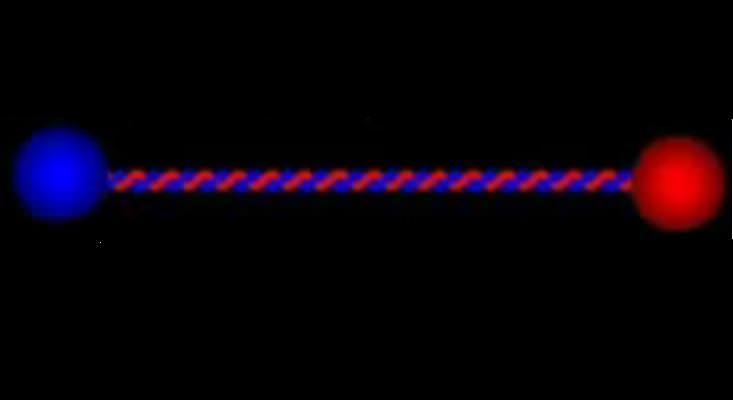
Obviously atoms are not balls, herein I am neglecting detail in the physical structure of the atom in order to concentrate on the structure of the physical intermediary. Also this is a hypothetical 2 atom universe. Each atom is connected via this structure to every other atom. I also do not insinuate that the structure is actually colored blue and red, or that they have any quality of what we think of as “color”. I merely distinguish them as red and blue in the illustration to make clear that there are two thread-like entities entwined corresponding to what is mathematically described as the electric and magnetic fields.
At the outset, I argue that this entity intuitively justifies several observations of light:
-
Rectilinear propagation. A connection between atoms ensures that the signal is rectilinear, a torsion/transverse signal has no choice but to travel rectilinear along this taut medium.
-
Why light (transverse) is so much faster than sound (longitudinal). This structure is a continuous entity. Intuitively we would expect an entity which is not composed of smaller entities to transmit motion far faster than a discontinuous entity (air).
-
Oscillation of two effects at 90 degrees to each other. The configuration illustrated simulates this by its inherent nature.
-
Frequency/wavelength/color, the number of turns of the rope per unit length is the frequency and the length of a turn is the wavelength. It has no choice but to obey c=f*w.
-
The principle of ray reversibility. Whether reflecting or refracting light retraces its exact path.
-
Young’s slit experiment:
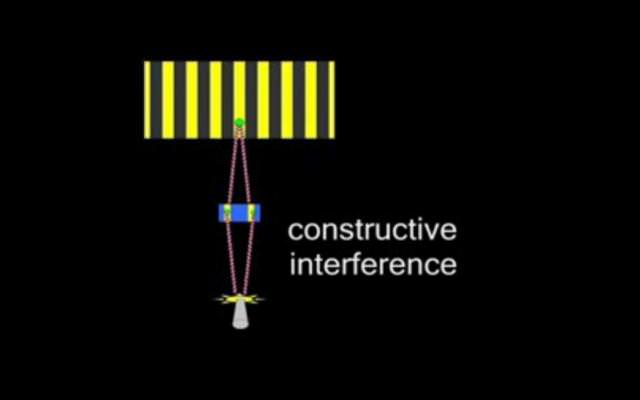
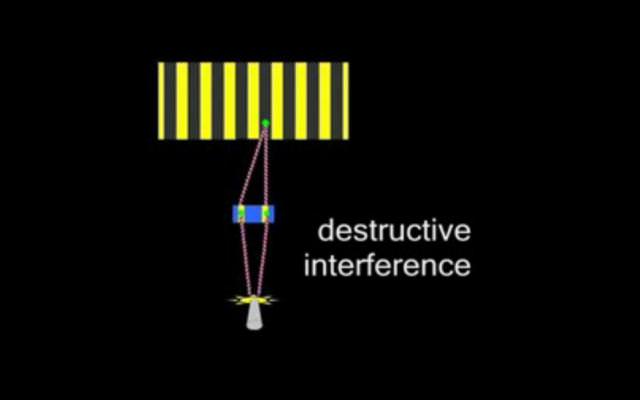
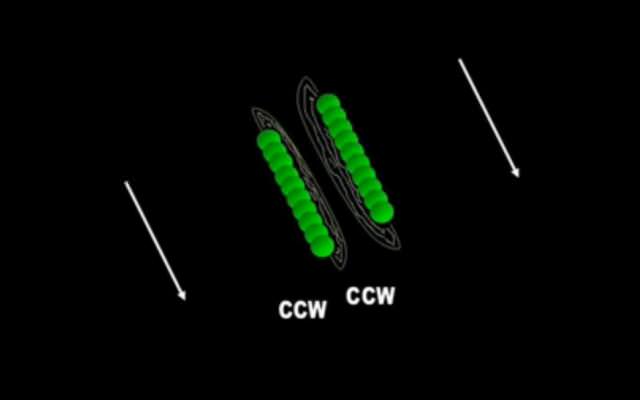
Remember, the source atoms are connected to all the atoms in the detector. A single excitation of the source transmits a torsion signal of a specific frequency to every atom of the detector. When two ropes converge on an atom of the detector and one is exactly lambda longer than the other it will transmit a torsion that is exactly out of phase in comparison to the other rope. The atom is being both excited and suppressed simultaneously.
Those who are not intimately familiar with the behavior of light may be confused by this, and it may not make sense. Feel free to ask.
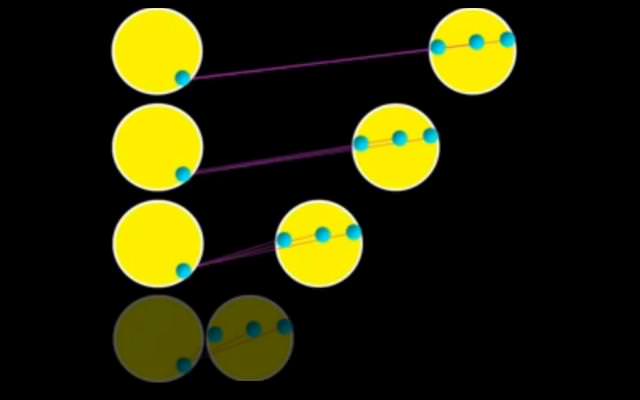
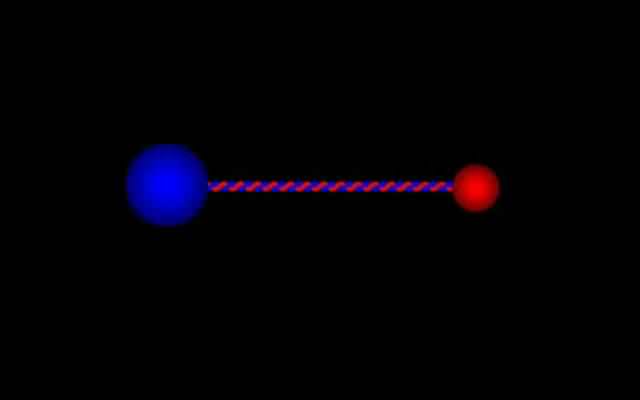
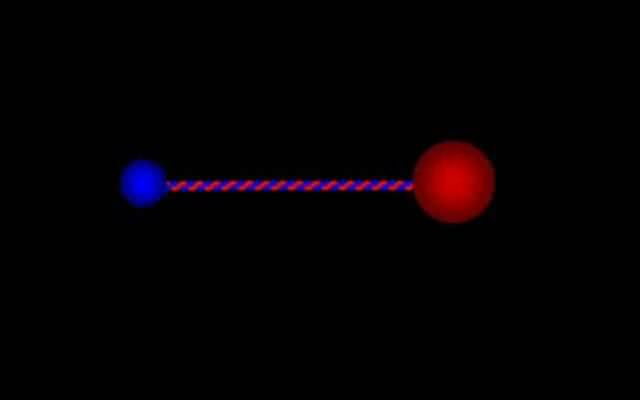
I also argue that I will justify several other behaviors by integrating the proposed structure of light with a hypothesis of the atom’s structure. For instance, “quantum jump” which, at present, is simplistically illustrated:
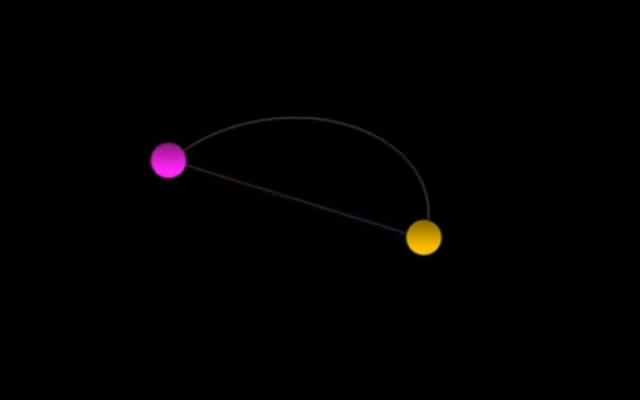
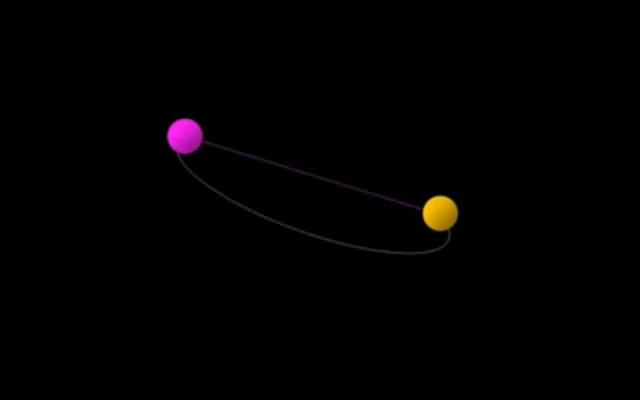
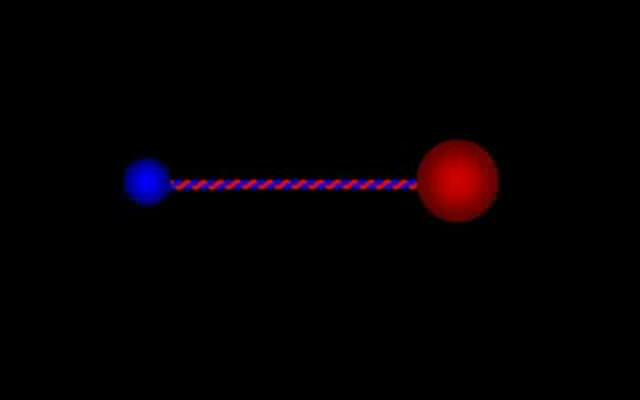
In this simplistic view (without yet illustrating the structure of the atom and how it fits in) the transfer of “photons” between two atoms looks like the following process:
The photoelectric effect:
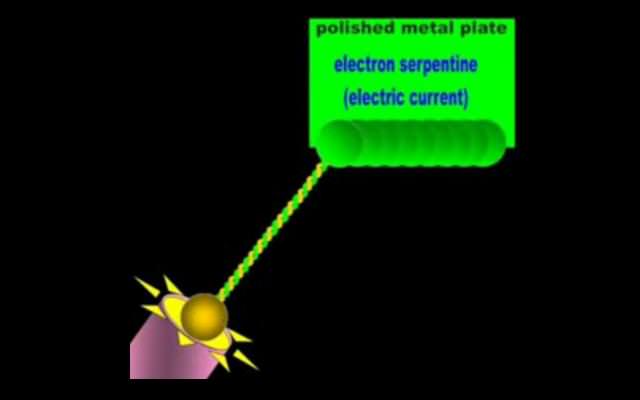
I have not justified the illustrated behavior. Particulate properties of light are intimately connected with the atom, as illustrated by history. The Maxwellian wave viewpoint of light was the Gold Standard until empirical observations by Perrin, Thomson, and others were explained in terms of a flow of particles called electrons. Once the electron was “discovered” and black body radiation cast classical EM in doubt, quantum began to rear its head. Experiments seemed to indicate that, contrary to the Maxwellian view, light was absorbed and emitted in discrete units rather than continuously. I will now pose a structure for the atom consistent with this behavior.
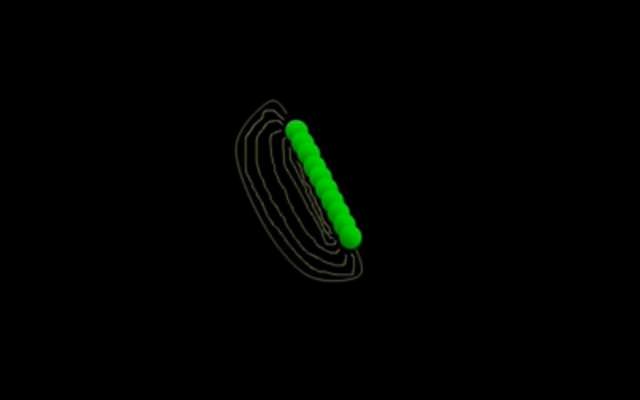
First off, why not particles? Of course this could be a huge topic that would take up much time and space. However I will present at least an example of why I reject the particle model of the atom. An example of data from an accelerator looks as follows (this one is from Brookhaven):
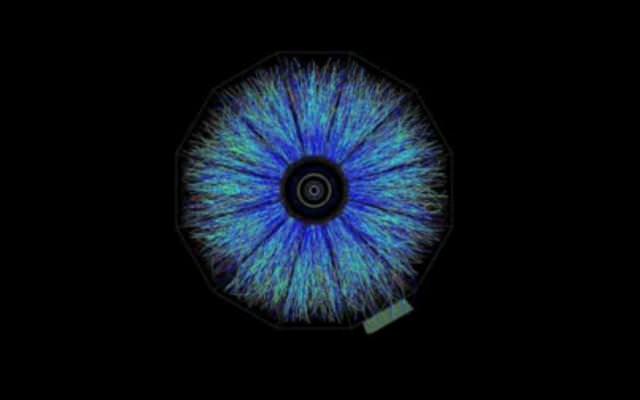
This is a 2D cross-section of the data that was taken, recorded, and produced from the collision of 2 gold ions. This is what the aftermath of a high E collision allegedly “looks like”. The quark is the smallest “particle” which can be detected in this apparatus. Two gold atoms should have no more than 1400 quarks (more like 1352). But in merely this 2D cross section we see thousands upon thousands of traces. This image is, to my mind, more consistent with some kind of thread-like entity converging upon the atom from other atoms. The extra “particles” in the image are probably justified as “energy”. This is reification. Energy is a concept, an observed *relationship*.
Rather than a particle the electron looks more like a shell that encapsulates the atom. Up close it looks like a ball of yarn:
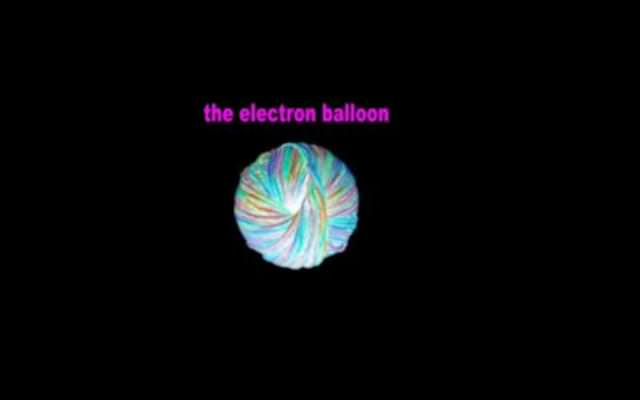
The nucleus looks more like a dandelion:

Taken together the H atom looks like:
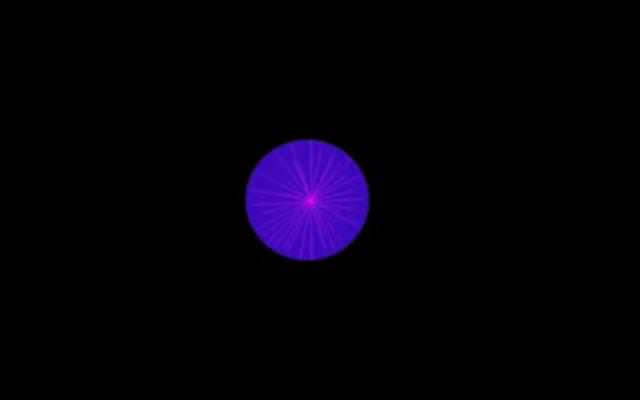
A more schematic view, naming the two threads for convenience:
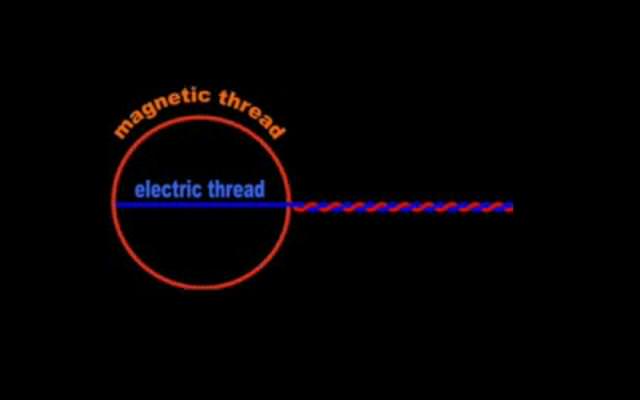
When the electron shell expands it does so only by torquing the rope at the expense of a certain number of links (shown here taking in one):
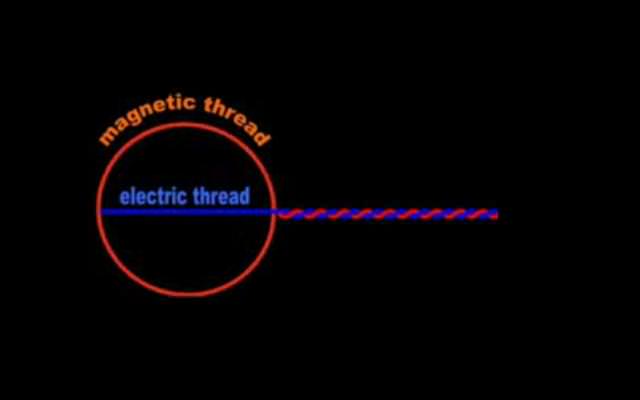
And when it contracts it must release a link:
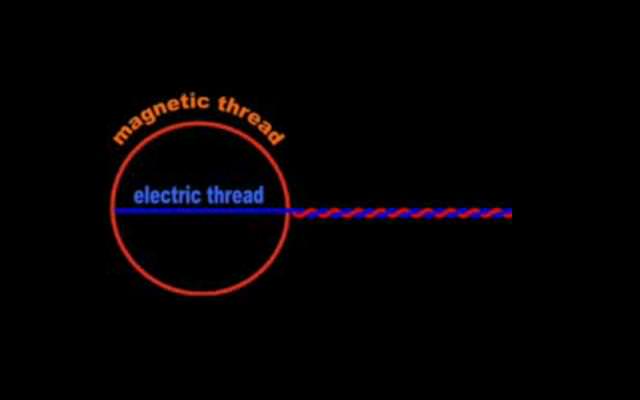
The aggregate of links absorbed/released is what we call “energy”.
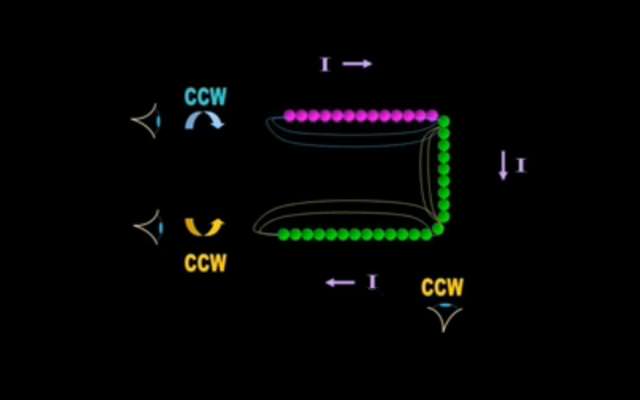
What about magnetism and current? How does the proposed entity physically justify magnetic attraction and current? How does gravity come in? I will finish this (admittedly) very broad-strokes story tomorrow by explaining how the entity proposed physically causes the phenomena known as magnetism, current, and gravity.