Hi there. Some engineers and technicians are staying on the site of the powerplant to save what can be saved and to limit the amount of radioactive emissions. By doing this they put their health and lives at risk. So knowing they could just leave far away from this danger with the ones they love, is it a case of sacrificial beahaviour? Given the fact that they might save millions of lives, is their behaviour reprehensible from an objectivist perspective? Or is it heroïc?
Hi there. Some engineers and technicians are staying on the site of the powerplant to save what can be saved and to limit the amount of radioactive emissions. By doing this they put their health and lives at risk. So knowing they could just leave far away from this danger with the ones they love, is it a case of sacrificial beahaviour? Given the fact that they might save millions of lives, is their behaviour reprehensible from an objectivist perspective? Or is it heroïc?
Their choice should be looked at in the wider context of their prior commitments. They signed up to work these jobs long before the disaster. It’s a career choice. If they chose their careers fully aware of both the benefits and the potential dangers, and it was a worthwhile trade for them, then it wasn’t a sacrifice. Not running away now is of course also not a sacrifice. Giving up their values and integrity by breaking their commitment to do these jobs would be the sacrifice.
But, of course, if the context changes and TEPCo. or the government asks the workers to do things they did not sign up for (like go on a suicide mission), then the above argument becomes irrelevant. Then the decision no longer has anything to do with what they signed up for, it should be made in the new context.
1 Like
Hi there. Some engineers and technicians are staying on the site of the powerplant to save what can be saved and to limit the amount of radioactive emissions. By doing this they put their health and lives at risk. So knowing they could just leave far away from this danger with the ones they love, is it a case of sacrificial beahaviour? Given the fact that they might save millions of lives, is their behaviour reprehensible from an objectivist perspective? Or is it heroïc?
In addition to what Tanaka said, it also has to be asserted that
a. Their lives belong to them,
thus
b. others have no right to demand and/or force their staying there.
and
c. Whatever benefits conferred upon others that may result from their actions are extras, not obligations.
therefore
d. Since others have no claim on these benefits and received them out of goodwill, the response should be “thank you, you are a hero,” not “you did your duty to the nation, you are a hero.”
Edit:
For details on the topic, see
Rand “The Ethics of Emergencies,” “Collectivized Ethics,” chapters in The Virtue of Selfishnes.
Branden “Benevolence Versus Altruism,” article in The Objectivist Newsletter.
Bernstein “Egoism as the Necessary Foundation of Goodwill,” chapter in Capitalism Unbound.
OK, thank you Tanaka and 2046. In this case we don’t know if they all do this job for rational reasons. It might be an uninformed cliché but I heard of the importance of sacrifice in Japanese culture. For instance, some of these engineers may do this job by sense of duty or to restore the honour of the country. I guess my point is that in some cases, bad motivations can lead to good actions.
Interesting article comparing a few major disasters at dams, power-generating facilities and a coal-mine.
HT: Timothy Sandefur
Bloomberg: Japan Nuclear Disaster Caps Decades of Faked Reports, Accidents
Daily Mail ran a story with lots of big photos.
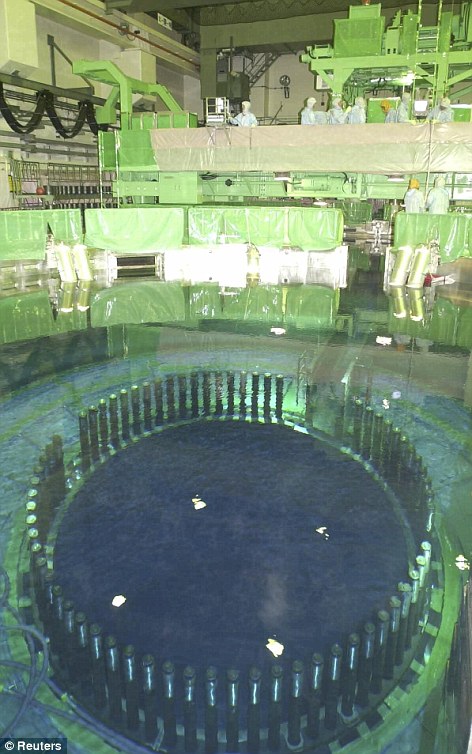
Here is an alleged photo of the crane and spent fuel pool of unit #4 before the accident
Here is photo of the same green painted gantry crane over the spent fuel pool of unit #4 photographed from the air after the accident.
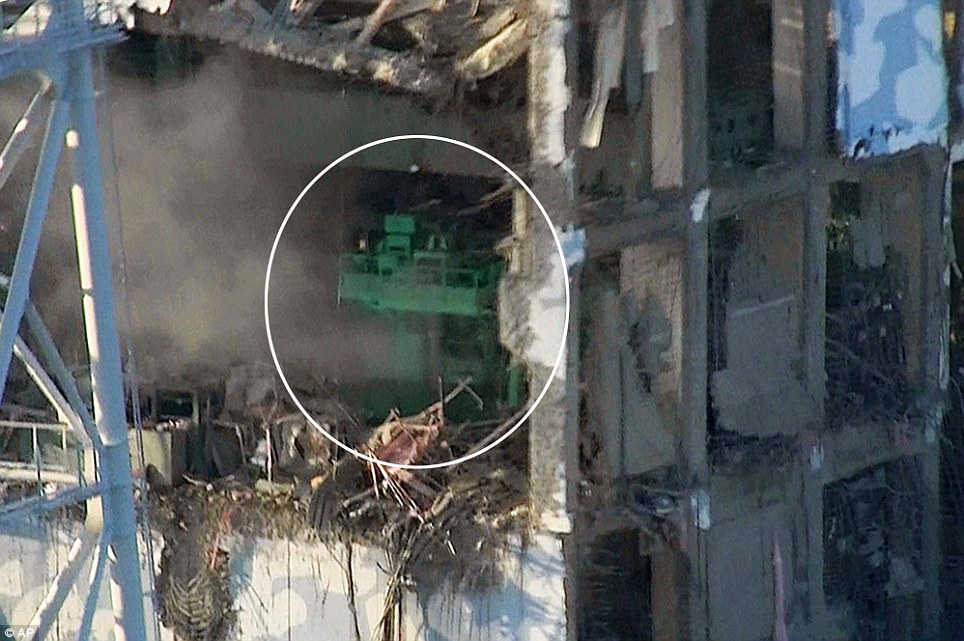
Naked fuel rods exposed to the atmosphere is not the worst case nuclear accident, but it is never supposed to happen.
TEPCO says the spent fuel pool (SFP) of #4 has water in it, but I don’t believe them. Gamma radiation shining upward out of the pool caused the helicopters dumping water the other day to bolt extra metal under the seats as shielding for the pilots. If the rods were fully covered there would be no gamma radiation from them.
1 Like
A physicist at UCSB gave a presentation recently on the risks from the Fukushima accident. His conclusion: “The worst case radiation hazards from Fukushima are mitigatable and local. The global radiation hazard is nil.”
A physicist at UCSB gave a presentation recently on the risks from the Fukushima accident.
Thanks for that link: long, but informative.
Fukushima I Nuke Plant Reactor 4 Spent Fuel Pool, Cask Pit 3/21/2012
https://www.youtube.com/watch?v=thDAAxLDB8M
Sunlight.