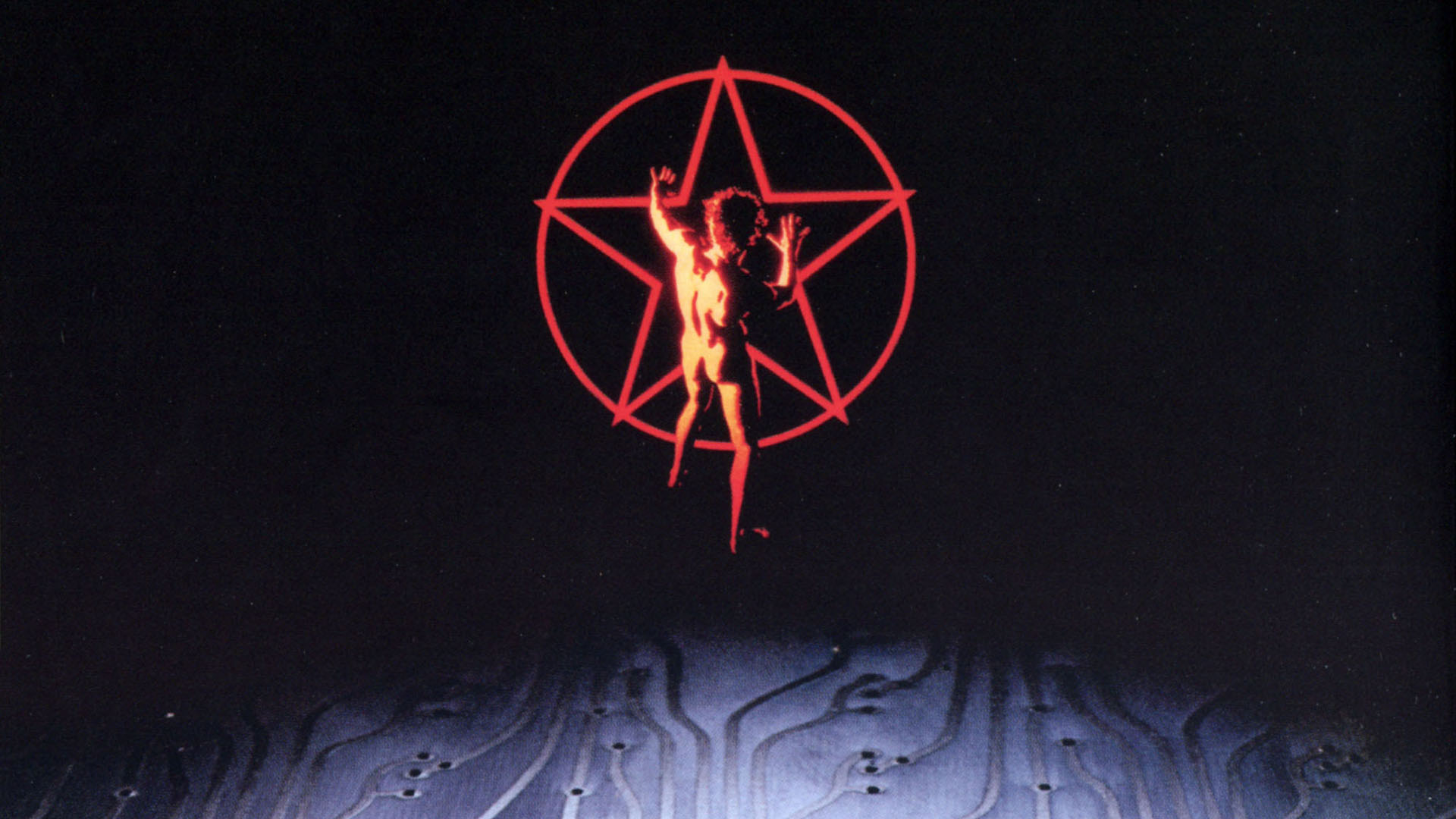
Does anyone understand what Rush’s symbol means? (The “Starman”?)
Here’s a pic:
Does anyone understand what Rush’s symbol means? (The “Starman”?)
Here’s a pic:
The symbol is supposed to represent man resisting tyranny. The star (which is red in color versions) was the symbol of the bad guys on the album 2112. The man recoiling against it portrayed the hero from that album. (It always seemed to me that a red star as a symbol of oppression almost certainly referred to the Soviets. But that’s just my opinion.)
The symbol is supposed to represent man resisting tyranny. The star (which is red in color versions) was the symbol of the bad guys on the album 2112. The man recoiling against it portrayed the hero from that album. (It always seemed to me that a red star as a symbol of oppression almost certainly referred to the Soviets. But that’s just my opinion.)
Thanks! I was a bit suspicious of the symbol at first…where did you find that out?
The Man is the Hero from 2112, which is, essentially, a regurgitated version of Anthem (which is another great Rush song)
I also, believe that it is the same man, standing on the brains on the cover of “Hemispheres”
I Love Rush album art.
The Man is the Hero from 2112, which is, essentially, a regurgitated version of Anthem (which is another great Rush song)
I also, believe that it is the same man, standing on the brains on the cover of “Hemispheres”
I Love Rush album art.
Yes that is also the man from Hemispheres… I would say you’re correct, that he represents “resistance against tyranny”, at least in the context of the Star & Man logo.
But – just to make sure the Rush references are 100% correct  – I wanted to add that in the context of Hemispheres he represents the libido (the “Dionysus” section of the lyric), whereas the suit-and-tie man represents the rational, logical side of us (the “Apollo” section of the lyric). And of course the struggle between those two sides of our mind (and therefore many of the conflicting desires we encounter throughout life) is the entire premise behind Hemispheres…
AFAIK, Rush did not come up with that Star/Man logo until some time after Hemispheres (if I’m wrong on that feel free to correct me!), so I’m not really sure who/what they had in mind in regards to the Hero from 2112.
Lastly (just an FYI), the link to that image is from my old ISP and apparently they’re offline. At least every time I try to connect I get “CONNECTION REFUSED FROM INTAC.COM”. Same image, new location: http://rush.robpagano.com/images/webring.jpg B)
(You can find more Rush info at http://rush.robpagano.com))
I am a HUGE Rush fan. It is weird, however, how they place the song “Passage to Bangkok” right after “2112”. 2112 espouses Reason while Passage to Bangkok is just about looking for the best weed to get stoned off of.
And isn’t it ironic, don’t ya think?
AFAIK, Rush did not come up with that Star/Man logo until some time after Hemispheres (if I’m wrong on that feel free to correct me!), so I’m not really sure who/what they had in mind in regards to the Hero from 2112.
What? 2112 Came out in 76 and Hemishperes came out in 78. The Starman logo had been around for a couple years prior to Hemishperes.
Interesting. Thanks for the input!
I am a HUGE Rush fan. It is weird, however, how they place the song “Passage to Bangkok” right after “2112”. 2112 espouses Reason while Passage to Bangkok is just about looking for the best weed to get stoned off of.
And isn’t it ironic, don’t ya think?
Well…that doesn’t sound too different from the mental battle between “Reason” and “Pleasure” (i.e. Love) depicted in Hemispheres! 
What? 2112 Came out in 76 and Hemishperes came out in 78. The Starman logo had been around for a couple years prior to Hemishperes.
A-ha, I stand corrected!!! I’m glad you caught me on that – now I did my research and sure enough, he was on the back cover of 2112.
http://www.2112.net/powerwindows/Wallpaper1.htm
http://www.2112.net/powerwindows/wallpaper/2112back.jpg
The problem is, my cd doesn’t have that on the back! It just has the track list, not the original album art…so that’s why I didn’t know he was on there (until now). Well if I was never wrong, then I’d never have the chance to learn anything new! So thanks for calling that to my attention! 
And he definitely does stand for the “man against the masses”. Not sure if anyone posted these quotes yet:
“All [the naked man] means is the abstract man against the masses. The red star symbolizes any collectivist mentality.” - Neil Peart, Creem, 1982
“The man is the hero of the story. That he is nude is just a classic tradition … the pureness of his person and creativity without the trappings of other elements such as clothing. The red star is the evil red star of the Federation, which was one of Neil’s symbols. We basically based that cover around the red star and that hero.” - Hugh Syme, “From Brainwaves to Tidal Waves: The Story Behind Rush’s Album Covers”, Creem, 1983
Another thing about the “Starman”. People often refer to the figure (having no real knowledge on the subject) as a pentagram, therefore accusing of Rush as satanic. I find it funny because he even claims “I don’t believe in the old dirty bastard”. I’m sure I misquoted but the Power Windows site is down for me.
I am new to the forums here, and I am a huge Rush fan.
It’s the individual against the collective, that they chose a star to represent the collective is probably not a coincidence (red stars being a favorite of communists and socialists).
mrocktor
The star isn’t a pentagram which is favored by satanists. The pentagram has to be inverted so that two “horns” are at the top with the “scruff” or single point is at the bottom. The star as Rush depicts it is actually a pentacle. Though the differences in the words are small, they do have a vast difference in meaning.
The star as it is presented is actually the Star of Solomon. Solomon having five points and David having six. The modern new age and witchcraft movements coopted it into their use. It traditionally represented protection. That is why the satanists inverted it just like a cross. Heck, even Morrocco uses it in their flag. It’s a common symbol in different parts of the world. In the old days it used to be more common than today thanks to the cooption of the symbol like the swastika.
AFAIK, Rush did not come up with that Star/Man logo until some time after Hemispheres (if I’m wrong on that feel free to correct me!), so I’m not really sure who/what they had in mind in regards to the Hero from 2112.
hemispheres came out in october 1978 by that time they already had 2 albums out with starman on it (all the worlds a stage 1976 and archives april 1978)
All of you are wrong. This is a quote from Neil Peart. “The Starman” logo first appeared on the cover of the 1976 album 2112. Neil Peart explained in 1982 "All it means is the abstract man against the masses. The red star symbolizes any collectivist mentality. Ok, so some of you were on the right track.
I am a HUGE Rush fan. It is weird, however, how they place the song “Passage to Bangkok” right after “2112”. 2112 espouses Reason while Passage to Bangkok is just about looking for the best weed to get stoned off of.
And isn’t it ironic, don’t ya think?
Sorry for being part of a revival of a year-old thread, but I just wanted to say in response to the quote above above - I was also bothered by that, until I decided the train in Bangkok which goes around the world could be symbolic of the transcontinental train in Atlas Shrugged.
Maybe this is wishful thinking, but after a song like 2112, why not? I don’t have the album, but I know Rush mentioned Rand as an inspiration on the album cover of 2112 .
Does anyone understand what Rush’s symbol means? (The “Starman”?)
Here’s a pic:
Rush album art is great. Hunter Cashdollar
I did always wonder about that, but I wasn’t bothered by it. I enjoy the song for the music and exotic imagery conjured up by the lyrics, not the fact that it’s about being a globetrotter in search of “good smoke.”
I was a diehard fan of theirs for a while until my tastes drifted away from prog rock and towards roots, garage and alternative rock. I was quite intrigued by their recent Feedback EP, although I could have done without the Stephen Stills/Buffalo Springfield covers. I’ve always had a disdain for sappy, collectivist hippie music!
T.
Sorry for being part of a revival of a year-old thread, but I just wanted to say in response to the quote above above - I was also bothered by that, until I decided the train in Bangkok which goes around the world could be symbolic of the transcontinental train in Atlas Shrugged.
Maybe this is wishful thinking, but after a song like 2112, why not? I don’t have the album, but I know Rush mentioned Rand as an inspiration on the album cover of 2112 .
“A Passage to Bankok” was not designed, orginally, to come after “2112”. On my copy (which is a Long Playing disk), Side “A” is 2112, and side “B” is all the other songs. In order to listen to “A Passage to Bankok” (or anything else), most people would have to flip the disk over and put the needle on the disk, and the songs don’t play straight through. I don’t know how long the gap is between “2112” and “A Passage to Bankok” on a CD, or how it feels to hear that song to be played right after “2112”.
I think Bangkok serves Peart’s views a little more, the best of both worlds is how he would probably put it. You have your “Apollo” track and then after you have your “Dionysus” track. You could also look at it as “ok, I just listened to a really serious song, now I need to give my head a rest and listen to a song about something stupid, like weed”. It could have also been a lyric exercise "I can write an epic about Individualism and I can write a song about pot. I will also say, out of the thousands of rock songs (mostly in the 60’s and 70’s) “A Passage to Bangkok” is definantly the best song, musically and lyrically, about pot.