.
.
Got Gold? - Gravitational-Waves and Gamma from Collision of Two Neutron Stars Inform
.
.
Pulsar and Companions Will Put GENERAL RELATIVITY to the Test - Clifford Will (1/6/14)
Science News - 2/3/18 - “The complex orbital dance of the three former stars conforms to a rule known as the strong equivalence principle, researchers reported January 10. That agreement limits theories predicting Einstein’s general theory of relativity should fail at some level.” That is, this measurement puts a tighter constraint on theories unifying quantum field theory with general relativity by supposing the strong equivalence principle does not hold at sufficiently small scales.
[The Confrontation between GENERAL RELATIVITY and Experiment](https://arxiv.org/pdf/1403.7377.pdf) - Clifford Will (3/28/14)Keep posting these please, I always read these updates.
On 2/9/2018 at 11:07 PM, Grames said:
Keep posting these please, I always read these updates.
Interesting thread.
One thing that hasn’t been emphasized here is that modern presentations of SR based of symmetry are rather difficult to refute:
http://www2.physics.umd.edu/~yakovenk/teaching/Lorentz.pdf
Of course physics is an experimental science and its ultimate validation is experiment not theory. But it does show if its wrong some of our basic notions about the world would be wrong - which would be a very very interesting and surprising thing.
That’'s SR - what about GR. That’s actually quite interesting. In SR where t is the proper time the principle of inertia implies a particle moves that maximizes the proper time when you integrate it along the path it follows. If dt is a infinitesimal amount of proper time in turns out dt = Nuv dXu dXv and the path is the one that maximizes the integral dt = Nuv dXu dXv - this is called the principle of maximal time. That’s in the usual Cartesian coordinates and time as usually measured. But you can mathematically transform to general coordinates so Nuv dXu dXv becomes Guv dXu dXv when dXu are the new generalized coordinates and Guv is called the metric.
This means Guv acts like a field - determining the motion of a particle. One of the principles of physics is you can derive field changes by whats called the principle of least action. OK lets apply that to Guv. Here we make use of a very interesting theorem called Lovelock’s Theroem:
https://en.wikipedia.org/wiki/Lovelock’s_theorem
That shows that GR ie the Einstein Field Equations are the only solutions.
If you are not a math type just in a general way accept what I said above.
If you want the gory detail see the following by Lovelock and Rund:
https://www.amazon.com/Tensors-Differential-Variational-Principles-Mathematics/dp/0486658406
Now the question is where does the Equivalence principle enter into it. Its not that easy to answer. Also it raises the same issue as SR. If GR is wrong some of out basic notions would be wrong.
Thanks
Bill
Thanks, Grames. Thanks, Bill Hobba.
[Famaey, Khoury, and Penco 2018](https://arxiv.org/pdf/1712.01316.pdf)

“The observed tightness of the mass discrepancy-acceleration relation (MDAR) poses a finetuning challenge to current models of galaxy formation. We propose that this relation could arise from collisional interactions between baryons and dark matter (DM) particles, without the need for modification of gravity or ad hoc feedback processes.”


[Berezhiani, Khoury, and Wang 2016](https://arxiv.org/pdf/1612.00453.pdf)

“Cosmic acceleration is widely believed to require either a source of negative pressure (i.e., dark energy), or a modification of gravity, which necessarily implies new degrees of freedom beyond those of Einstein gravity. In this paper we present a third possibility, using only dark matter and ordinary matter.”This note is not on experimental tests, but links to some big-picture physics.
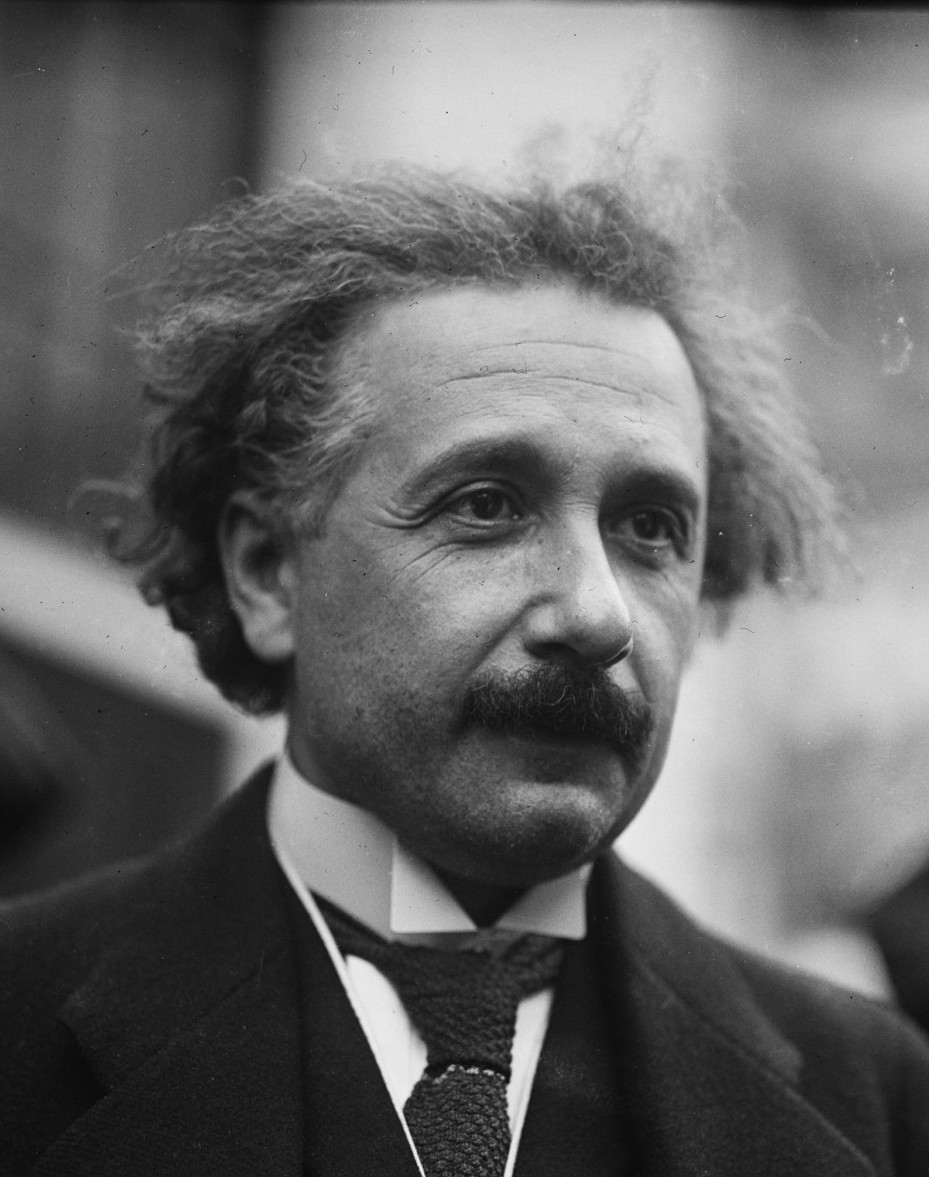
It happened that when I was briefly in graduate school in physics at Chicago, it was the centennial of Einstein’s birth. Among the speakers who came over in our celebratory year, was this man, who in my lifetime was a light of the world.
This note too is not on experimental tests, but this seems a fair place to put it.
Since Stephen Hawking made the theoretical discovery of particle/anti-particle pair production at the event horizon of black holes, many couldn’t help but think he was touching some key to future profound unification of quantum mechanics and relativity. For Hawking had drawn that conclusion we know as Hawking Radiation by doing quantum field theory in the spacetime structure at the event horizon. This possible key seems to be taking further tantalizing shape by recent work on quantum chaos effects in black holes.
Gravitational Wave Signal 190521 => A Binary Black Hole Merger with a Total Mass of 150 Solar
R. Abbott et al. (Phy. Rev. Ltrs. 9/2/20)
2020 Nobel Prize in Physics
For: Theoretical Foundation for Black Holes and the Supermassive Compact Object at the Galactic Center
One half to Roger Penrose for the discovery that black hole formation is a robust prediction of the general theory of relativity.
The other half jointly to Reinhard Genzel and Andrea Ghez for the discovery of a supermassive compact object at the centre of our galaxy.
A recent test dropping atoms (wave packets) of two different masses (two isotopes of rubidium) in vacuum confirms sameness of their gravitational accelerations to an accuracy of one part in a trillion. The sameness of free-fall acceleration in vacuum for all bodies whatever their mass is a famous proposition championed by Galileo. Its correctness is a requirement for the correctness of general relativity and other geometric theories of gravity. In the current experiment, during the fall of the atoms, physicists put them into a quantum state of superposition in which an atom had superposed locations distributed between two points separated by up to 7 centimeters. “When the two locations were brought back together, each atom interfered with itself in a way that precisely revealed its relative acceleration.” —Emily Conover for Science News 11/12/20
If I’m understanding correctly, “relative acceleration” means here merely acceleration of one of the atomic species in comparison to acceleration of the other species.
2 hours ago, Boydstun said:
A recent test dropping atoms (wave packets) of two different masses (two isotopes of rubidium) in vacuum confirms sameness of their gravitational accelerations to an accuracy of one part in a trillion.
Do you think such experiments prove anything about the nature of space?
MS, I think they do. I’ll say what I see they say, but I’m pretty sure they imply even more than I am aware of so far, and I’m pretty sure that experts in relativity and quantum mechanics (including quantum field theory) could draw out those further implications. And I imagine that beyond all implications about the nature of space that can be drawn from all of modern physics taken together, there remains further physics as yet undiscovered that will, taken with present physics, have further implications for the nature of space.
I want to address your question, William, with respect to general relativity at test in the experiment. Surely there are implications for the nature of space in quantum nonlocality (which I take to be a physical, mind-independent reality) which was among the processes exploited in this experiment that resulted in a more precise measurement testing the independence of the gravitational acceleration value from the mass values of falling bodies at a place on the surface of the earth, which is in the same stroke a test of the sameness in the value of inertial and gravitational mass of a body (an atom in this experiment).
One background assumption I make in thinking about this is that structure of spacetime and of space are real physical structures and are independent of particular coordinate systems we use for expressing those structures (rectangular cartesian coordinates, circular cylindrical coordinates, and so forth). Interesting to me in thinking about implications for space in the present experiment: What does the experiment imply about space that is additional to the understanding we have of space from spacetime structure in the regime of special relativity? (We ourselves, like the falling atoms, propagate along time-like world lines lying at once in both levels of spacetime structure, i.e., spacetime structure of both SR and GR, supposing those theories true.)
Within spacetime, in as much structure as is implied from SR, we think the nature of space (such as we each are in) as . . . [to be continued and in that continuation joined with GR]. But just now I’d like to mention that SR is probably still more fully certified in observations and in controlled experimentation than is GR, even though, as this thread attests, the latter is highly corroborated in observation in recent times thanks to decades of work required to devise such sensitive instruments.
William used the word prove. There are physical facts we might be reasonably said to prove such as the fact that I’m presently sitting in a chair and not on the floor. There are some scientific physical facts that could be said to have been proven, such as the atomic constitution of matter, electricity, and radiation; and that sort of proof was by layer-upon-layer of interconnected experimental investigations. Principles in an area of physics can be set in hierarchy. A fundamental principle in SR is constancy of the speed of light in vacuum, all the same speed no matter the state of motion of the material frame of reference from which it is measured. A fundamental principle in GR is the equivalence of inertial and gravitational mass. In physics fundamental principles such as these continue to be subjected to new tests adding decimal places to the accuracy with which the the principles’ claims about physical values have been corroborated.That is different than the proof methods we use in mathematics and different than proof methods we use show axiomatic status of a metaphysical proposition in philosophy. Proof is a somewhat different conception across these various arenas of comprehension, but a fine treasure in all.
The contribution of the present experiment to showing correctness of a fundamental principle of GR is a contribution to showing correctness of the structure of space implicit in GR. It is my understanding that among realist conceptions of space, GR lain over SR has set out grave difficulties for relational sorts of realism about space as opposed to substantival sorts of realism about space. That’s one thing I’ll be on the watch for in the continuation of this answer to William’s question.
4 hours ago, Boydstun said:
One background assumption I make in thinking about this is that structure of spacetime and of space are real physical structures and are independent of particular coordinate systems we use for expressing those structures (rectangular cartesian coordinates, circular cylindrical coordinates, and so forth).
When I imagine space as a physical structure, I cannot make sense of the vacuum drop experiment. Why doesn’t space resist a feather more than a metal cube?
https://www.youtube.com/watch?v=s9Zb3xAgIoY
The implication seems to be that physical space cannot affect the motion of physical matter. Thus, what exactly is meant by the term “physical”?
This second question from MS is rightly suited to discussion with Galilean and Newtonian physics and Euclidean geometry. We have taken it on in a new thread Physical Space dedicated to this question. There I mentioned a book Geometric Possibility by Gordon Belot, and here I’d like to draw attention to the reviews by Jill North, by Chris Smeenk, and by Syman Stevens, accessible through Prof. Belot’s website that register concerns of setting the book’s attainments alongside our Einstein-stage relativity physics and the dance of that physics with its attending geometries.
Here is a good paper on Einstein’s approach, beginning in the 1920’s, to finding a unification of his general-relativity gravitational field theory with theory of the electromagnetic field: Einstein’s Unified Field Theory Approach by Tilman Sauer (2007).
In the Sunday NYTimes paper 3 February 1929, Einstein had an article trying to explain his attempts on the unification. There was great interest in the US among the generally educated in what the German scientist was doing and in getting a grip on what he had wrought in his special and general theories of relativity.
In the Sunday NYTimes paper 26 January 1930, there is a report of the following:
“Despite the crowd of 4,500 persons which crashed the gate last week at a meeting of the Amateur Astronomers Association to see a motion picture explaining the Einstein theory of relativity, professors of mathematics are disinclined to believe that there is a growing interest in and popular understanding of the work of the German scientist. In learned circles, they say, the more revolutionary quantum theory of physics is the more absorbing.
Several instructors at Columbia University thought the peak of Einstein’ popularity was reached five years ago. The opinion was expressed that last week’s crowd was composed largely of laymen who, discouraged at trying to understand relativity from a reading of books, magazines and newspaper articles, went to the free movie at the American Museum of Natural History hoping to get an inkling of what it is all about. . . .”
(This is not an experimental result, but theoretical. This thread is a pretty good place to keep this notice nevertheless.)
17 March 2022
This new result in mathematical physics resolves the Hawking information paradox. A striking thing about Hawking’s theoretical discovery in 1976 of radiation from the event horizon of a black hole was that it resulted merely from doing quantum field theory in a classical general relativity spacetime (not a quantum spacetime or quantum gravity). It was not an introduction of new fundamental physics or new theory of spacetime. That is also true of this new result being announced this month. Both results exhibit harmony of quantum mechanics and general relativity, whatever greater unity and deeper understanding of the two is found in the future.
Quantum Hair and Black Hole Information
From the Introduction of the 2022 breakthrough paper by Calmet and Hsu, which has apparently resolved the Hawking information paradox:
“In 1976 Stephen Hawking argued that black holes cause pure states to evolve into mixed states. Put another way, quantum information that falls into a black hole does not escape in the form of radiation. Rather, it vanishes completely from our universe, thereby violating unitarity in quantum mechanics.[*]
“Hawking’s arguments were based on the specific properties of black hole radiation. His calculations assumed a semiclassical spacetime background – they did not treat spacetime itself in a quantum mechanical way, because this would require a theory of quantum gravity. The formulation of the information paradox has been refined over several decades, as briefly summarized below. . . .
“Hawking (1976): Black hole radiation, calculated in a semiclassical spacetime background, is thermal and is in a mixed state. It therefore cannot encode the pure state quantum information behind the [event] horizon.
“No Cloning (circa 1990): There exist spacelike surfaces (‘nice slices’) which intersect both the interior of the BH and the emitted Hawking radiation. The No Cloning theorem implies that the quantum state of the interior cannot be reproduced in the outgoing radiation.
“Entanglement Monogamy (circa 2010): Hawking modes are highly entangled with interior modes near the horizon, and therefore cannot purify the (late time) radiation state of an old black hole.
“These formulations are limited by the assumption of a semiclassical spacetime background. Specifically, as we elaborate in what follows, they do not address the possibility of entanglement between different background geometries (gravitational states). Recently it was shown that the quantum state of the graviton field outside the horizon depends on the state of the interior. No-hair theorems in general relativity severely limit the information that can be encoded in the classical gravitational field of a black hole, but the situation is quite different at the quantum level.
“This result is directly connected to recent demonstrations that the interior information is recoverable at the boundary: they originate, roughly speaking, from the Gauss Law constraint in quantization of gravity. It provides a mechanism (‘quantum hair’) through which the information inside the hole is encoded in the quantum state of the exterior gravitational field.”
The supermassive black hole at the center of our galaxy is in the constellation Sagittarius. It is about 27,000 light years from earth, its mass is four million times the mass of the sun, and the humans have taken a picture of it in 2022, shown here.
This object is known as Sagittarius A* (Sagittarius A star). From earth it lies in the strip of sky known as Sagittarius A. The diameter of its event horizon is roughly equivalent to the planet Mercury’s orbit around the sun. From earth that diameter is 52 micro arc seconds, which is as viewing from earth a donut lying on the moon. The event-horizon diameter matches what is predicted by general relativity for a black hole of that mass. Sagittarius A* is orbited by a diffuse gas of electrons and protons. That matter is being pulled from the atmospheres of stars orbiting it. Only 1% of the surrounding matter is being pulled into its event horizon in the era of its light reaching present earth. In that era, the brightness (luminance) of Sagittarius A* is only 100 times the brightness of the sun. There is evidence that as recently as 60 years ago, Sagittarius A* was not on a diet, but a feeding frenzy.
The electromagnetic radiation from Sagittarius A* that we receive at earth today departed from Sagittarius A* when our ancestors were in the last of the Paleolithic (last of the Old Stone Age). They could do some weaving, make nets, and make ceramic pitchers. They could make figurative cave paintings and they could make figurines. They could not write. Perhaps they made music, for they made flutes.