It looks like I need to clarify my view on the Moderns as being nihilists (which includes the Post Moderns). I can understand a revolt again Classicism because of their stupid restrictive rules, while the modern examples given above were the earlier works and have much merit but show a definite decline in clarity of style. Modernists generally range from Monet to Kandinsky, but my main point is that the philosophy behind Modernism has destroyed art to the degree of its unintelligibility which relates to its style, or if intelligible portrays the worst subject imaginable (which I call “axe through head” art) just walk into most art galleries and see for yourself.
11 hours ago, Alfa said:
For example Renoir’s “Dance at Le Moulin de la Galette” and “Luncheon of the Boating Party” (depicting both working class and bourgeois together), or the lively and peaceful street scenes from places that were recently ravaged by war.
Do you think it was Renoir’s intention to make all the females and males identical (or very similar) to each other? - especially the woman in “Dance at Le Moulin de la Galette”. Just an observation.
51 minutes ago, RomanticRealism said:
Do you think it was Renoir’s intention to make all the females and males identical (or very similar) to each other? - especially the woman in “Dance at Le Moulin de la Galette”. Just an observation.
I think Renoir purposefully down-played the faces in order to direct focus on to the form, tone, color, composition of the work. This is a fairly common tactic in such paintings as portraits. The artists gives detailed attention to what he wants you to see while less attention to other aspects.
Why does Sargent only “suggest” the lower part of the gown? Or provide less detail to the hands?
Edit: In this painting, Sargent wants you to scrutinize the face to discern the character of Lady Agnew. The body, the drapery of the cloth, the fact that she is off-set from the chair - all support what Sargent saw as her central character.
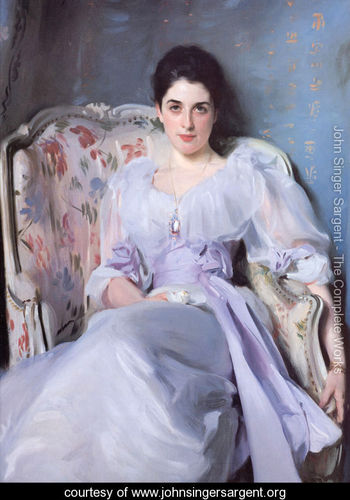
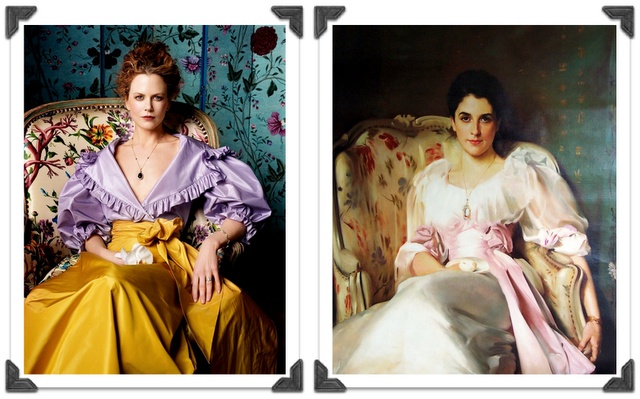
Here is a good example of what Rand calls “the selective recreation of reality.” Nicole Kidman is a beautiful woman and a fine actress, but Sargent could do with a painting what no photographer can do.
28 minutes ago, New Buddha said:
Why does Sargent only “suggest” the lower part of the gown? Or provide less detail to the hands?
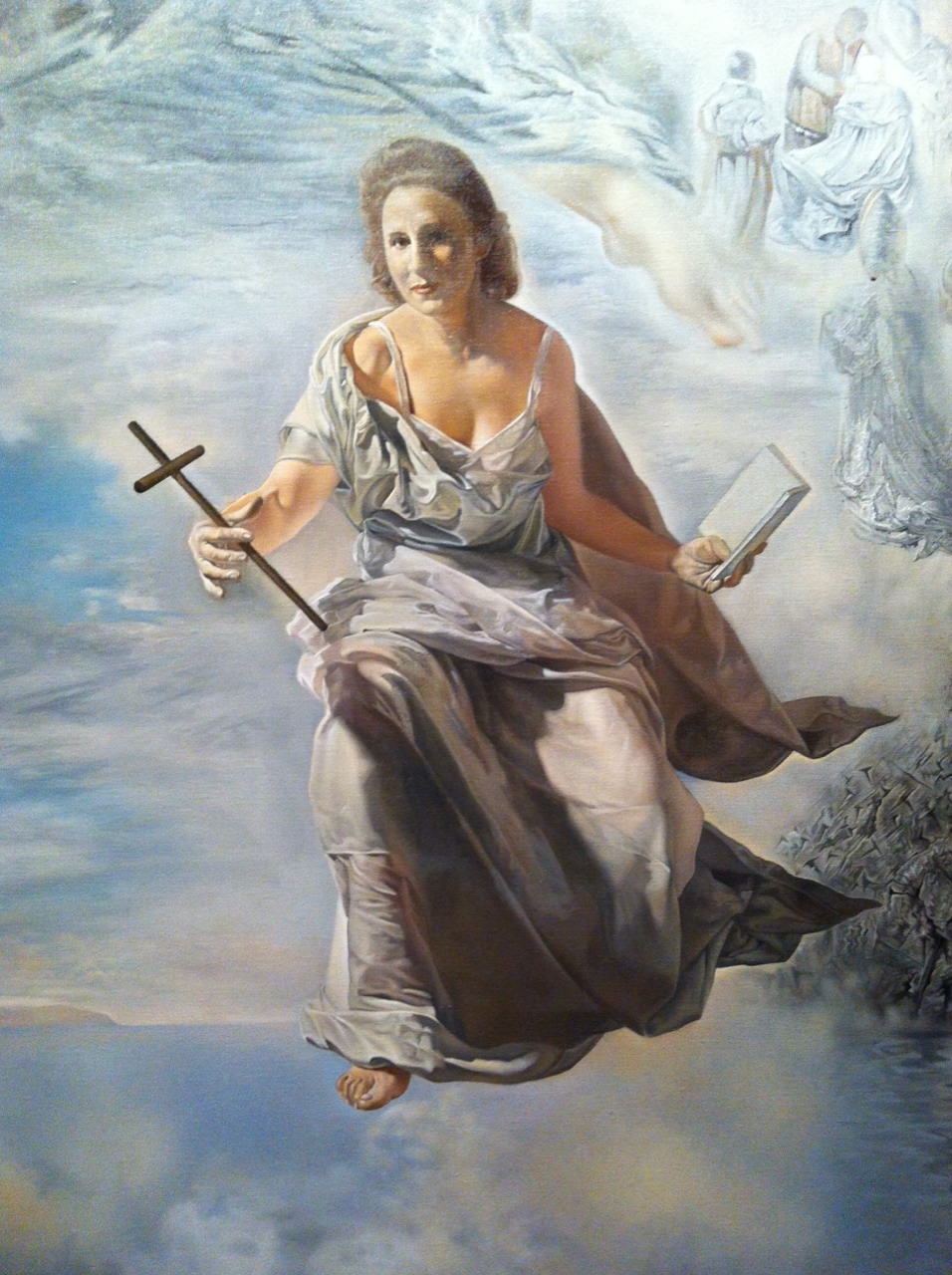
The type of stylization I prefer is when you have detail within areas of less detail like you mentioned but the less detail consists of gradations of form and colour, not smears. The fabric in Dali’s work shows areas of intricate detail combined with areas of very little detail made up of subtle gradations of colours and form - and with the way the light is captured, the result is a sharp visual clarity.
52 minutes ago, New Buddha said:
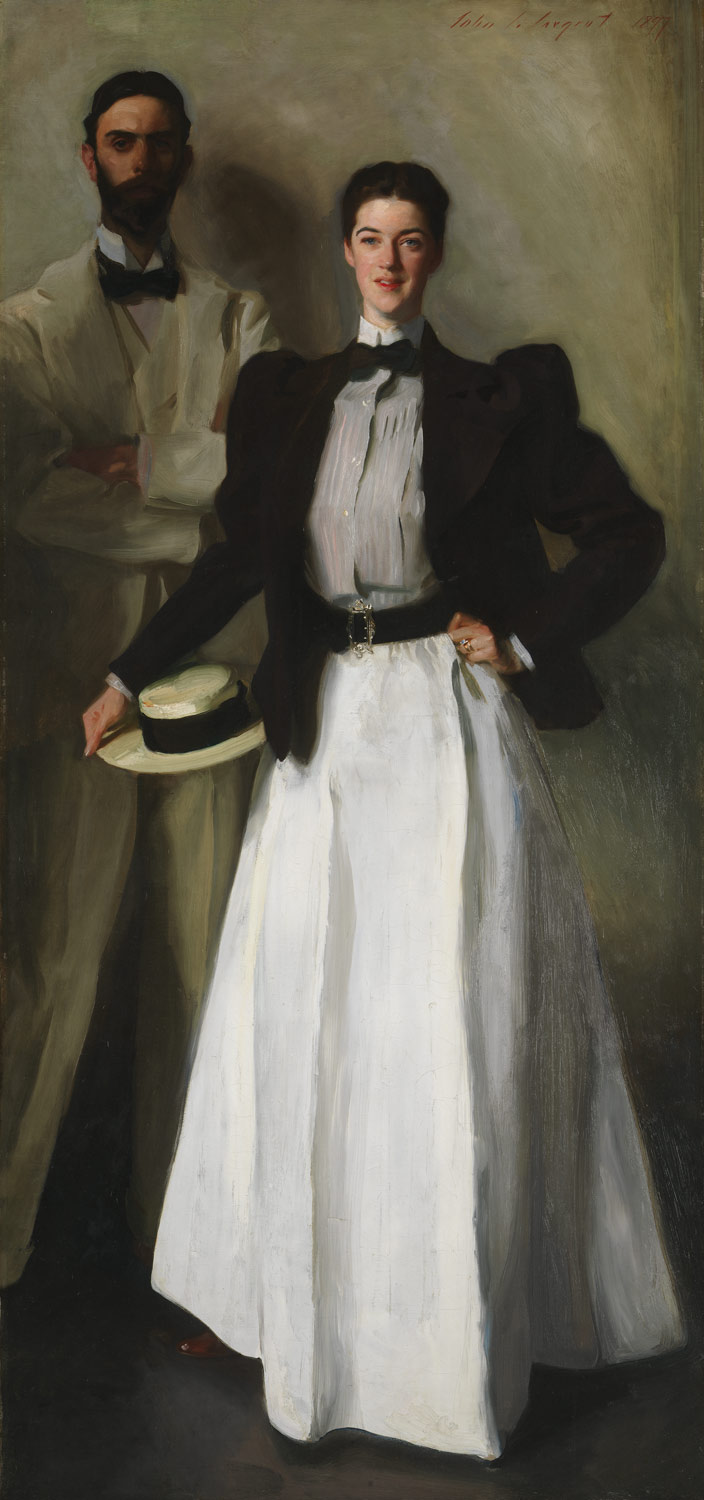
Sargent was a master at capturing and conveying character.
I agree Sargent was a master at capturing and conveying character especially the woman - the man looks a bit ominous, but that could be because of the lighting.
21 minutes ago, RomanticRealism said:
I agree Sargent was a master at capturing and conveying character especially the woman - the man looks a bit ominous, but that could be because of the lighting.
Well exactly. The fact that Sargent deliberately chose to obscure the male in shadow tells us something of the man’s character does it not? As does his posture. The fact that the woman is in full light, in a jaunty pose wearing a bright white skirt with her hat cocked to the side tells us something of her character as well.
The lighting, shadow, brush work, attention to detail in some parts and not others, the “smears” as you call them – all are deliberately chosen in support of what the artist is trying to convey about the couple.
In the Lady Agnew portrait, the languid brush work and the reclined posture conveys something of her character. Suppose that she had been centered upright in the chair, and the chair were centered, head-on in the painting and every detail conveyed in photo realism. What would Sargent be telling us about her?
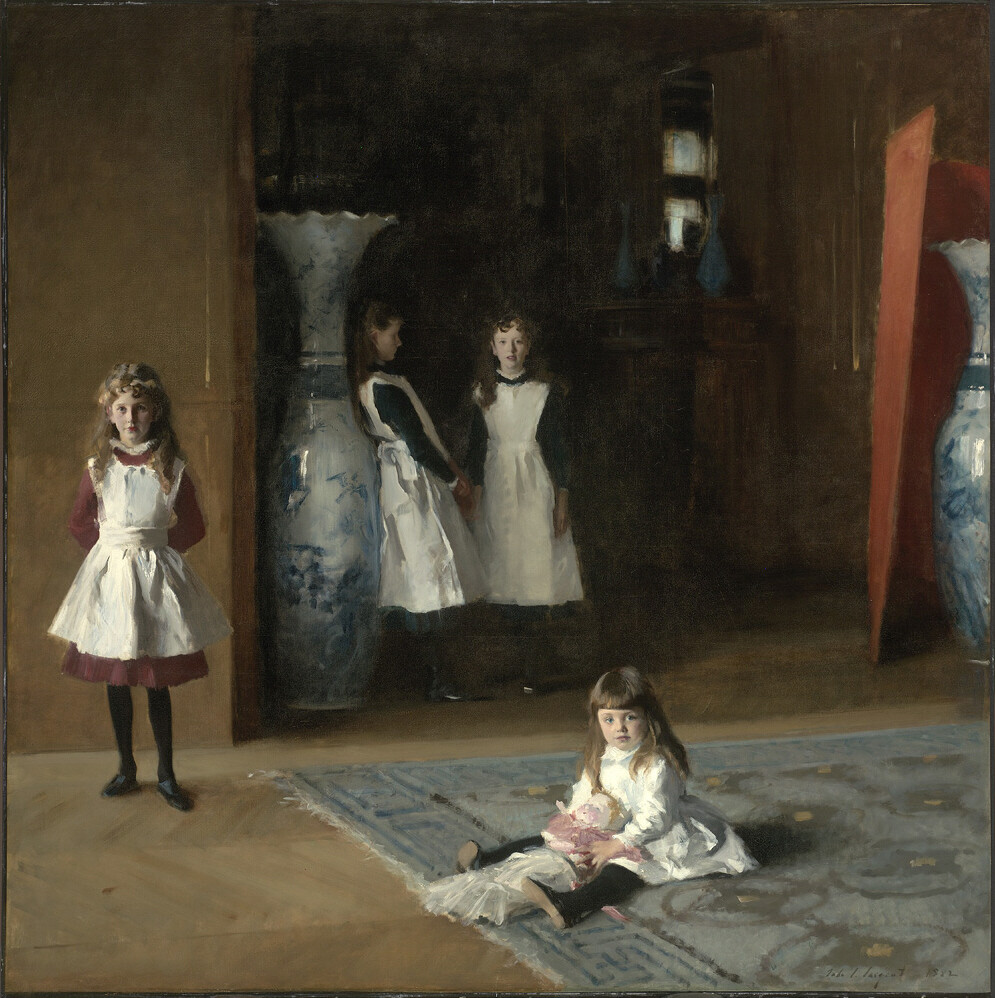
Three of the girls are attentive towards the viewer. The girl facing away is not interested except with her interaction with the girl in front of her before she was interrupted by the viewer (visitor). Prior to the visitor the two older girls in the background were interacting and the two in the foreground were playing together, but the girl on the left is the least relaxed, she has moved away and stood at attention. The visitor is neither friendly nor threatening. I don’t know anything about this painting - have I missed anything?
6 hours ago, RomanticRealism said:
I don’t believe they can, because they are attributes of concretes. On their own they can’t communicate anything broad. Texture would be at the perceptual level and no more than that. You simply recognise it as texture. And I’ll take it a step further, a single concrete that is representational can’t communicate anything broad (theme). You need 2 or more concretes - concretes that relate to each other.
You’re sneaking in “communacte anything broad”. Do you think strong verticals in a composition communicate the same feeling as a horizontal composition? Can you tell the difference in feeling from looking at a piece of brushed metal and a piece of plastic? Do you Think it’s all the same to lead the eye through a painting wiht long sweeping arcs or through short abrubpt turns? Is a cool blue all the same as a warm orange?
I certainly think they communicate quite different things.
5 hours ago, RomanticRealism said:
Very nice piece of music! What music evokes is a very broad sense, a general feeling. The concretes that you associate with those feelings will differ for each person. So you will have to answer that question yourself. An example is how a director chooses music to enhance a movie because of how the general sense of the music relates to the specifics he believes are being shown and in most cases the viewer will relate as well. What makes music special is that it seems to take you from the general to the specific, where as painting starts with concretes. People who try to justify non-representational painting believe the process is the same as it is in music ie start with some general feelings and then relate it back somehow to concretes. Painting is not music.
Painting is not music is not an argument. Associations drawn from general feelings is not the same as communicating concretes. You haven’t made the case why, for instance, Kandinsky’s paintings couldn’t evoke general feelings, and why you couldn’t draw associations from that just like in a piece of music.
I like Kandinsky as an example since I think he quite successfully does that, and I would associate Scriabin’s etude with one of his paintings.
4 hours ago, RomanticRealism said:
Do you think it was Renoir’s intention to make all the females and males identical (or very similar) to each other? - especially the woman in “Dance at Le Moulin de la Galette”. Just an observation.
His intention was to capture the sense of the place and the crowd, the sense of being there. That’s why he didn’t focus on the faces. You wouldn’t make out the details of faces in a crowd, but you would notice the atmosphere, shapes and forms, and the movements. The women and men are more easily told apart by their clothing, the latest fashion in Paris at the time.
2 hours ago, Alfa said:
Painting is not music is not an argument.
“Painting is not music” is an argument because understanding the visual arts as I had explained in my previous posts is clear-cut - that painting is conceptual because of the relationship between recognisable concretes, but the problem with music is no one has the knowledge so far to explain the exact cognitive process. I have only attempted to explain it earlier in the sense of it being like a movie, or being placed within a movie - by introspection only.
In a Kandinsky painting there are no recognisable concretes, only attributes to concretes. If you could explain the conceptual relationships within a Kandinsky painting (similar to my explanation of the Sargent painting) I will call you a genius. Now if a Kandinsky painting makes you feel good while viewing it, that’s great - it is a very good form of decoration.
12 hours ago, RomanticRealism said:
I agree Sargent was a master at capturing and conveying character especially the woman - the man looks a bit ominous, but that could be because of the lighting.
I would still like for you to expound further on the above comment.
In multiple responses to Alfa and me you seem unwilling (for some reason) to acknowledge the obvious – that form, color, texture, lighting, shadow, detail, composition, brushwork, etc. are capable of conveying information.
The cognitive ability to make crossmodalconnections between tastes, textures, colors, sounds, forms, volumes, movements, smells, tones, hues, etc. forms the very basis of an individual’s aesthetic ability. Some people have it highly developed across all senses, some don’t. Making these types of crossmodal connections is something that persons with a highly developed atheistic sense do automatically. A willow tree has a different “tone” than an oak tree.
The root of this ability lies in evolution. Think of the difference in sound that a dog makes with a playful bark and a menacing one. Think of the dogs different body language as well. This emphatic ability to understand the mental state and intent of others is not unique to humans. It is found across all animals that nurture, raise and teach their young (it’s tied to the emergence of the limbic system in the brain). Humans are unique in that we can make crossmodal connections and can project this ability into non-living, non-representational things - such as architecture and music - but also to brushwork, shadow, lighting, etc.
Rand understood that words have different connotations – based not just on their semantic content – but also on their tone. Take for example the way your lips, tongue, and breath forms the following two words: “rough” and “smooth”. The first requires short abrupt bursts and movements, while the second’s s- and oo- can be formed and drawn-out continuously over time. (The vowels (a,e,i,o,u) are defined by how the sounds are formed.) If you run your hand over a rough surface, what happens? You feel small, abrupt changes in motion. What happens if you run your hand over something smooth? The motion is continuous. Making these types of crossmodal connections is paramount to appreciating art. English is a particularly rich language with many influences - both Latinate and Germanic - and many subtle variations in tone, if not meaning, can be implied by the selection of certain words.
9 hours ago, RomanticRealism said:
“Painting is not music” is an argument because understanding the visual arts as I had explained in my previous posts is clear-cut - that painting is conceptual because of the relationship between recognisable concretes, but the problem with music is no one has the knowledge so far to explain the exact cognitive process. I have only attempted to explain it earlier in the sense of it being like a movie, or being placed within a movie - by introspection only.
In a Kandinsky painting there are no recognisable concretes, only attributes to concretes. If you could explain the conceptual relationships within a Kandinsky painting (similar to my explanation of the Sargent painting) I will call you a genius. Now if a Kandinsky painting makes you feel good while viewing it, that’s great - it is a very good form of decoration.
The answer that is missing here is why painting could not reach man’s emotions directly, like music. Saying that painting is conceptual because of the relationship between recognisable conretes is not really an answer to that.
Could you explain the conceptual relationshop within a piece of music?
I could say that I find this:

to invoke the feeling of Walking along a quay on a bright sunny day, set against a blue sky and ships sailing in the water, while it’s busy with people and things moving about. I could of course point to such things as the warm yellow color, the blue triangle and the different shapes and so on and so forth. My own associations are certainly at play here and I have no idea of Kandinsky’s intent, though some things are probably quite universal. I would for example be very suprised if someone found the mood to be dark and depressing.
Could you say much more about this?
(not suggesting they have quite the same mood, by the way)
6 hours ago, New Buddha said:
In multiple responses to Alfa and me you seem unwilling (for some reason) to acknowledge the obvious – that form, color, texture, lighting, shadow, detail, composition, brushwork, etc. are capable of conveying information.
I did, very clearly in a previous post: Alpha asked " Can shapes, colours, textures, arrangements etc. communicate something without representing any concretes? - you can read my previous post but I will have to reword it and see if I can be clearer.
All of the above (minus brushwork) are ATTRIBUTES of entities. They are NOTHING without the objects they are part of. Light can not be portrayed without it falling upon an object, your chosen subject. What makes light and shade (shadow) possible are the forms that the object possess. I never said to you the above attributes are not capable of conveying information. When you talk about certain attributes in your above post you link them back to objects (willow, oak tree). I said to Alpha those attributes are not capable of conveying information without the entities they are associated with. Alpha mentions “arrangements”- arrangements of want? Clearly defined objects? What I object to is taking those attributes and making them float, by detaching them from what makes them possible in the first place - the subject. So I would reword your statement by saying: ATTRIBUTES of entities in painting are SO IMPORTANT because it is what make those objects REAL.
6 hours ago, New Buddha said:
18 hours ago, RomanticRealism said:
I agree Sargent was a master at capturing and conveying character especially the woman - the man looks a bit ominous, but that could be because of the lighting.
I would still like for you to expound further on the above comment.
You have asked me this because I mentioned LIGHTING. See my previous post on attributes. However I will answer your question. The man’s posture, his demeanor and his being placed in the shadow, the colour of his clothes are similar to the background which makes the darkness of his face standout. He is recessed into the background except for a bit of light on his face to suggest he is present.
3 hours ago, Alfa said:
The answer that is missing here is why painting could not reach man’s emotions directly, like music. Saying that painting is conceptual because of the relationship between recognisable conretes is not really an answer to that.
Realistic painting does reach man’s emotions directly (or very quickly) because the artist has done all the work. The viewer can pick up on extra details, implications, subtleties, etc, but the main idea is portrayed quite instantly because, if produce well, the sum of the related entities (including their attributes) convey and idea (theme).
The cognitive process of painting, literature, dance are different. Painting and sculpture are the same. Non recognisable painting (which I call decoration), if called fine art causes this problem; you would have to say that the cognitive process of representational art is completely different to non-representational art thus creating a whole new art form. Is that what you propose? - painting has 2 categories simply because you wish to include decoration?
19 hours ago, New Buddha said:
Consider this picture, and what it tells us of the girls.
I will also add; the large vases were added for a reason. The girl indifferent to the “visitor” leaning on the expensive vase is probably an act of defiance, she probably isn’t allowed to be leaning on it.
New Buddha, this piece is obviously important to you for you to choose it. What are your thoughts on the girls?
1 hour ago, RomanticRealism said:
You have asked me this because I mentioned LIGHTING. See my previous post on attributes. However I will answer your question. The man’s posture, his demeanor and his being placed in the shadow, the colour of his clothes are similar to the background which makes the darkness of his face standout. He is recessed into the background except for a bit of light on his face to suggest he is present.
I’m asking why you stated, “but that could be because of the lighting.” And not, the man appears ominous because of the lighting.
I took from this (and some of your other posts) that you don’t believe that Sargent’s deliberate use of shadow has anything to do with the man’s appearing “ominous”. Do you think the shadow just happened to be there, so Sargent painted it? Or do you think he used it as a technique to convey character?
14 minutes ago, New Buddha said:
I took from this (and some of your other posts) that you don’t believe that Sargent’s deliberate use of shadow has anything to do with the man’s appearing “ominous”. Do you think the shadow just happened to be there, so Sargent painted it? Or do you think he used it as a technique to convey character?
Clearly the latter! Sargent was very deliberate about what he wanted to convey. That is why when an artist includes something (such as lighting, shadow) it is as if the artist is emphasizing its importance simply by including it.