Clearly the latter! Sargent was very deliberate about what he wanted to convey. That is why when an artist includes something (such as lighting, shadow) it is as if the artist is emphasizing its importance simply by including it.
Okay. Then I must have misunderstood you. You seemed to grant that Sargent did capture the woman’s character, but that the man’s character only might have been captured - and that the shadow was an unexplained anomaly in the painting.
Like the shadow, I also extend this type of technique to include the level of detail on the various parts of Lady Agnew’s gown and the expressive features (or lack there of) on the individual faces in Renoir’s painting. You questioned why Renoir’s faces were “similar”.
In Sargent’s personal portrait’s (at least the examples I’ve posted) he wants you derive an understanding of his subjects individual character from their faces - even the man’s which is partially obscured by shadow. In a different way, Renoir downplays the individual characters facial expressions in order to draw an overall impression of the the atmosphere of the scene. If Renoir had spent too much time on the individual faces, then the observer would be drawn to the various “stories” being told by the various characters - something Renoir did not want.
If Renoir had spent too much time on the individual faces, then the observer would be drawn to the various “stories” being told by the various characters - something Renoir did not want.
that painting is conceptual because of the relationship between recognisable concretes, but the problem with music is no one has the knowledge so far to explain the exact cognitive process. I have only attempted to explain it earlier in the sense of it being like a movie, or being placed within a movie - by introspection only.
That would mean no one knows if music is art. People can and do recognize communication without concretes - in music, in abstract art, and it is shown in psychology experiments. If you don’t understand abstract art, that’s fine, but it’s not like a book written in Spanish isn’t art because you don’ t understand. It makes some sense to me - so I visualize things like abstract art sometimes.
If you don’t understand abstract art, that’s fine, but it’s not like a book written in Spanish isn’t art because you don’ t understand.
I thought I explained this in my earlier posts. Abstract art is not art because not just me but no one can understand it. If I fill a canvas with blue paint because I like blue, blue makes me feel good, it also reminds me of the sea and of course the sky which is beautiful, it also reminds me of a holiday I once had… Abstract art is decoration, not art as I have described it. I do not denigrate decoration - I love many forms of decoration including many design disciplines.
New Buddha, this piece is obviously important to you for you to choose it. What are your thoughts on the girls?
This piece was only important with regards to how Lady Agnew was presented off center from the chair.
The way I see the painting is that the placement of the girls (with respect to the painter) was determined by their respective ages. This was his “technique”.
As each girl grows older, she (they) becomes a little more distant and begin to turn inwards - as teenagers are prone to do - with the oldest one shown only in profile.
I thought I explained this in my earlier posts. Abstract art is not art because not just me but no one can understand it. If I fill a canvas with blue paint because I like blue, blue makes me feel good, it also reminds me of the sea and of course the sky which is beautiful, it also reminds me of a holiday I once had… Abstract art is decoration, not art as I have described it. I do not denigrate decoration - I love many forms of decoration including many design disciplines.
I tend to agree with you. However, I would say that Abstract “paintings” are or might (generously) be seen as decoration - and that decoration is a form of art. I do like abstract, representational paintings.
Edit: I mean I feel your pain, RR. I have known some abstract painters who couldn’t, with a gun to their heads, paint a meaningful, representational work - but none the less, consider themselves to be painters and artists. They “hide” behind abstraction.
I can forgive Picasso much because he could paint in any style he chose - from Old Master’s to Modern.
People can and do recognize communication without concretes - in music, in abstract art, and it is shown in psychology experiments.
54 minutes ago, Eiuol said:
I explained that people can…
I don’t know in what form that communication would take without concretes. Concretes are what we need to understand reality therefore providing meaning in communication.
By representational, I mean things i.e. people, trees, boats, etc.
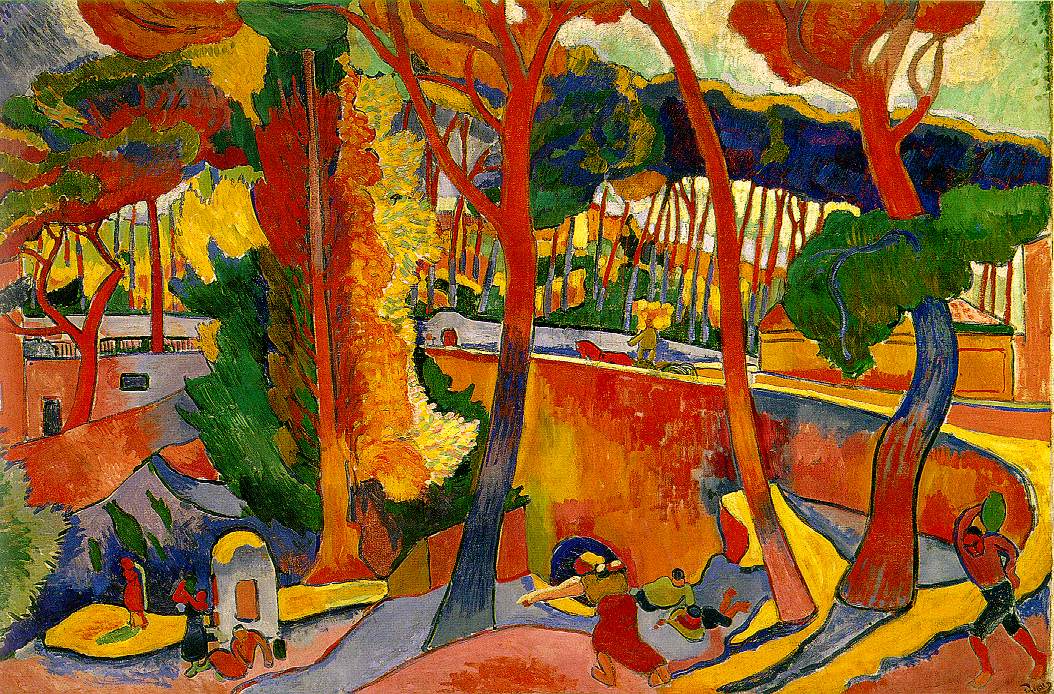
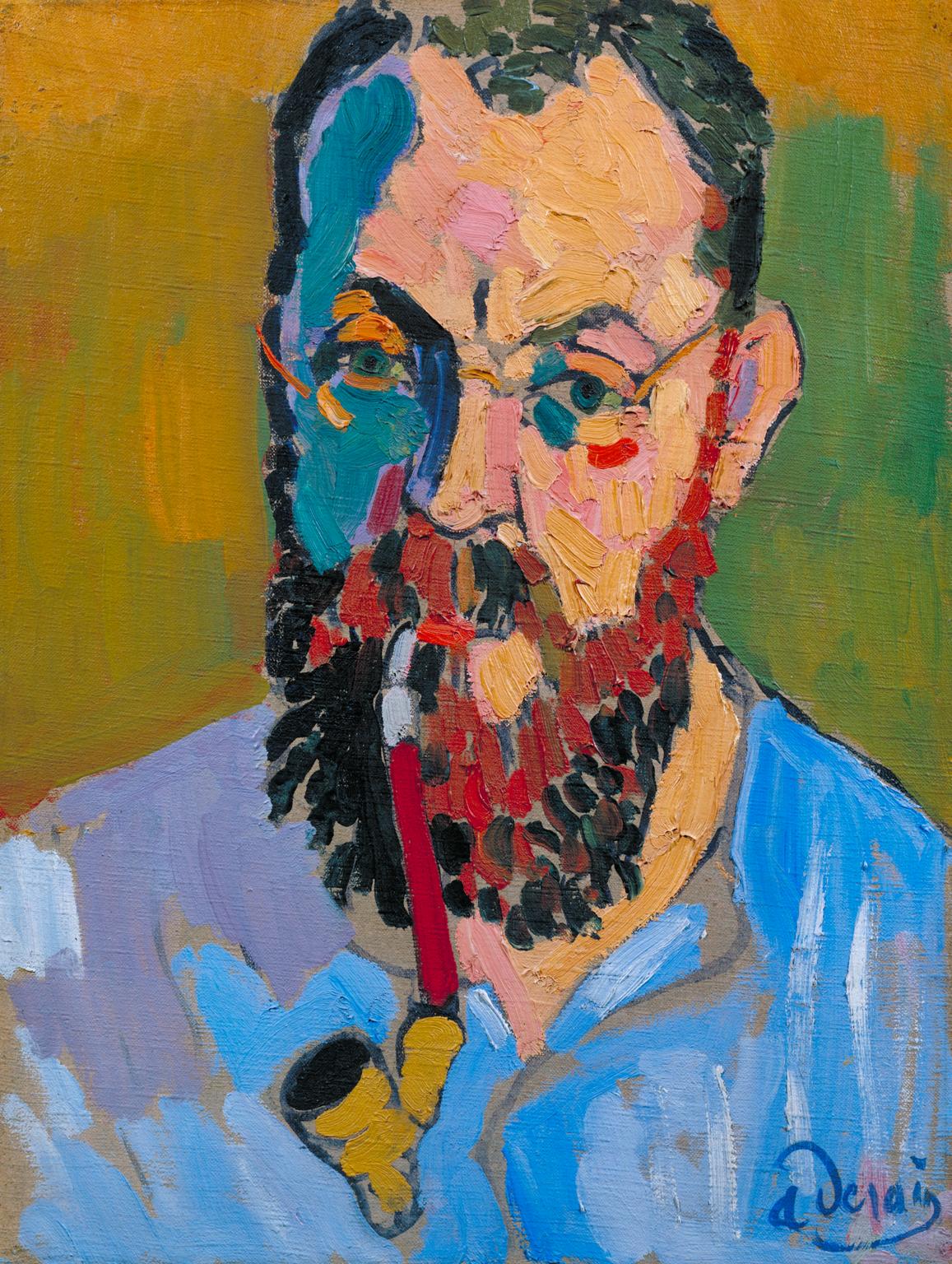
As an example, something from Andre Derain’s Fauvism period.
Okay, now you are going to really hate me! You posted earlier about what I call attributes - colour, texture, lighting (includes shadow) and implied how important they are to you and art. I posted why and how I believed they were important to visual art and how they can add clarity. These 2 paintings are a good example of how poorly colour, texture and lighting is represented in a painting.
Okay, now you are going to really hate me! You posted earlier about what I call attributes - colour, texture, lighting (includes shadow) and implied how important they are to you and art. I posted why and how I believed they were important to visual art and how they can add clarity. These 2 paintings are a good example of how poorly colour, texture and lighting is represented in a painting.
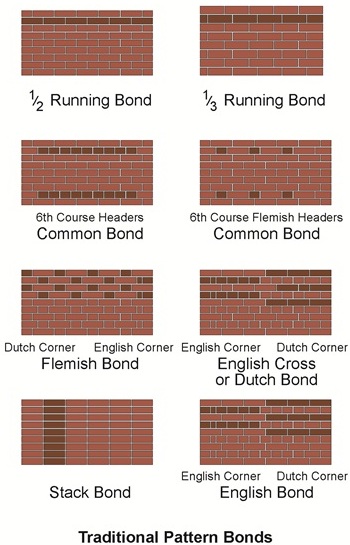
Well, no, I just don’t agree with your definition of “clarity”. To you, clarity is “realism” and to me “clarity” is the intent of the artist. And remember, I’m an architect. We can spend weeks searching for just the right type, texture and color of brick (such as Norman) and wrestle whether or not to use a running 1/2 bond or running 1/3 bond. I’m much more comfortable dealing with very abstract themes in design. I find texture (brush strokes) in painting to be very important. To me, painting should almost be sculptural.
Edit: And let me add, I like your work. I think “Just Music” really gets to the core of the matter. What medium is it?
In architecture, you always have to be concerned with resolving tensile and compressive forces. You can’t have compression with out tension, and you can’t have tension without compression. Tension and Compression have emotional value.
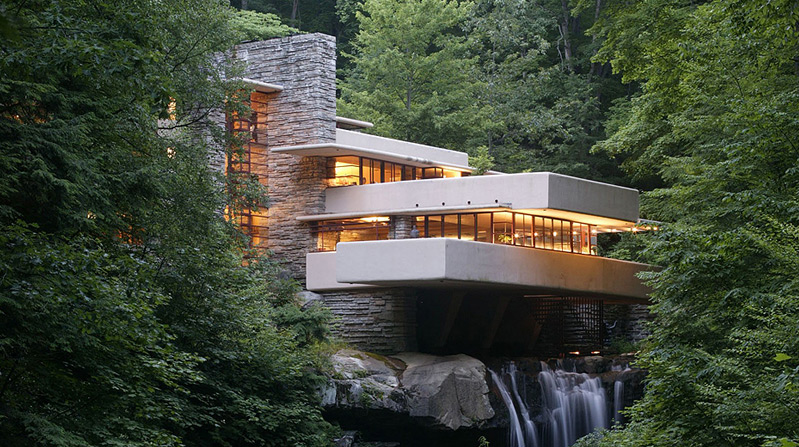
Stone is great at resisting load bearing compressive forces. Steel reinforced concrete can resist tension (thanks to rebar). As an example, Falling Water.
The load bearing, compressive stone anchors the tensile, reinforced concrete cantilevers.
In Wrights Price Tower, the concrete floors are cantilevering from a central, concrete core. That’s why he can use such thin copper mullions in the windows.
Well, no, I just don’t agree with your definition of “clarity”. To you, clarity is “realism” and to me “clarity” is the intent of the artist.
Clarity to me is simply visual clarity. I do not mean photo realism which I recoil from - I mean stylised realism. To give you a small but important example say: if you observe that when you have sunlight next to shadow the light area directly next to the shadow appears brighter and the shadow next to the bright area appears darker. When an artist observes reality and recognises this, the artist can then show this and exaggerate it to achieve added clarity. Clarity in painting is important because it is a artist’s choice of style - “style expresses a view of man’s consciousness.” Ayn Rand (she put it better than I can). Clarity in style is equivalent to clarity in thought.
“style expresses a view of man’s consciousness.” Ayn Rand (she puts it better than I can). A clear style is like clarity in thought.
I just don’t place much stock in Rand’s opinions when it comes to the visual arts or music. And any one who doesn’t like Bach doesn’t know what they are talking about.
Ayn Rand never said Bach (or even Beethoven for that matter) was not a valid choice of art - she simply said it was not her taste (not her sense of life) and explained why. Her own choices or “dislikes” do not invalidate her theory on aesthetics.
Clarity to me is simply visual clarity. I do not mean photo realism which I recoil from - I mean stylised realism. To give you a small but important example say: if you observe that when you have sunlight next to shadow the light area directly next to the shadow appears brighter and the shadow next to the bright area appears darker. When an artist observes reality and recognises this, the artist can then show this and exaggerate it to achieve added clarity. Clarity in painting is important because it is a artist’s choice of style - “style expresses a view of man’s consciousness.” Ayn Rand (she put it better than I can). Clarity in style is equivalent to clarity in thought.
“Visual clarity” can be a bit ambigous. Ayn Rand for example didn’t like visible paint strokes, but is smooth blending really clearer or just smoother? Is Leonardo’s sfumato technique clearer than Sargent’s?
(Sargent painted with thick, opaque, brush strokes, making sure to really nail the color and value with every stroke. A technique that demands incredible skill and focus.)
As an observer with too little artistic knowledge to weigh in meaningfully, I just want to express my appreciation for all parties in this conversation – and especially New Buddha, RomanticRealism and Alfa – for a civil and very engaging and informative conversation.