The essentials of art are not always easy to pick out. As evidence, the Objectivist Academic Center will not let a undergraduate student critique any form of art in any paper he writes for all four years of the program. My guess is that this is because the analysis of art requires very conceptual and integrated reasoning, whereas most individuals tend to regress to concrete-bound thinking when analyzing art. An example of a concrete-bound criticism of art is: “A Mannerist painting has figures that are elongated, i.e. the hands and feet are stretched out” or “A Rococo painting has a playful mood and uses pastel colors.” Although these characteristics are mostly true, they are not the essential defining characteristics of such movements or works. Rand was very good at reducing various art movements and artworks to their essentials (she is the only one who correctly identified Romanticism as a form of art acknowledging the fact that man posesses volition, whereas others define Romanticism as "emotion based).
Maybe it would be helpful if you would identify exactly what it means for an artistic style to be “Kantian in nature.”
The clearest way to summarize Kant’s influence is: “Why reproduce reality when we have art?” According to Kant, there is no particular reason why art must be representational, as that is not a basis for beauty. That is to say, if I put a swash of red paint on a canvas that induces feeling in the beholder, then I have made a work of art, and that work of art has value in and of itself. It can even be a valid form of knowledge.
From what I’ve been able to gather from this conversation, it seems to mean anything that an Objectivist might not like aesthetically. Which aspects of Millet’s and Courbet’s paintings are you claiming to be the result of Kant’s influence? And are you suggesting that no artists prior to Kant included those same aspects in their work?
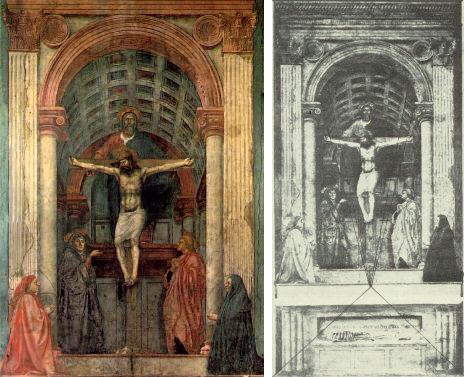
Take Courbet’s famous painting “The Stone Breakers.” Courbet defeats the pictorial drama that the Romanticists employed, i.e. Gericault’s “Raft of the Medusa”, by discarding the lessons learned since the Renaissance; by discarding the notion of illusion as a primary. Men don’t have to stand in an accurately depicted three-dimensional space anymore (matter of fact, they don’t even have to engage the beholder, they can just stand with their backs to the beholder, ignoring him entirely). The foremost technological advancement of the Renaissance in painting was the acquisition of the knowledge of how to accurately depict three-dimensional space on a two-dimensional surface (a canvas) by using the methods of a linear perspective, atmospheric perspective, sfumato, light, etc. A typical way of depicting spatial relationships is by the saying “up is back”, so that the top part of the painting is the furthest “back” from the beholder and the bottom of the painting is the “closest”. This is normally achieved by the use of a horizon line (see Piero della Francesca’s “Flagellation of Christ” for an early instance, he did a lot of work in understanding how this can be achieved. Look at the lines in the ground.).
Courbet uses a horizon line but places it above the heads of the two workers in “The Stone Breakers.” The result is that the painting is “flat”; it doesn’t really look like there is enough space for these two people to be standing there. Also notice Courbet’s treatment of light, one of the most important parts of any painting. The light is shining straight on to the figures, creating very thin shadows such that the outline of each figure is accentuated with a black line. The result is the diffusion of the drama of light itself, not to mention a very unconvincing depiction of light (no one perceives light in such a manner). The figures in “The Stone Breakers” look almost two-dimensional.
That’s the point. Courbet is trying to say to the beholder, “Yeah, it’s a painting…So what?” (Kantian) Look at Gericault’s painting “The Raft of the Medusa” and note how light is depicted. Imagine if Gericault opted for the same light as Courbet. The entire drama of the scene would be gone. Take a look at any work by Vermeer, one of Rand’s favorites. Here is what Rand has to say about Vermeer and his treatment of light in The Romantic Manifesto:
The greatest of all artists, Vermeer, devoted his paintings to a single theme: light itself. The guiding principle of his compositions is: the contextual nature of our perception of light (and of color).
With Millet’s “The Gleaners” you will also notice the high horizon line. The “upper classes” who employ these workers are there in the ‘distance’, above the absurdly high horizon line, but it really isn’t a convincing depiction of spatial relationships. Take a look at another realist painting: Edouard Monet’s “The Fifer.” Notice that there’s no horizon line at all! It isn’t difficult to see how this can ultimately lead to modern art; it is only a few steps away. Take away the figures and light entirely, and splash automotive paint everywhere (Pollack): “So what, it’s a painting, we don’t need to reproduce reality.”
And are you suggesting that no artists prior to Kant included those same aspects in their work?
I suppose you could say that artists included some of these elements before the Realists. For example, Japanese woodblock printing was an inspiration to Courbet, Millet, and Monet. But Japanese art is outside of the entire Western tradition.