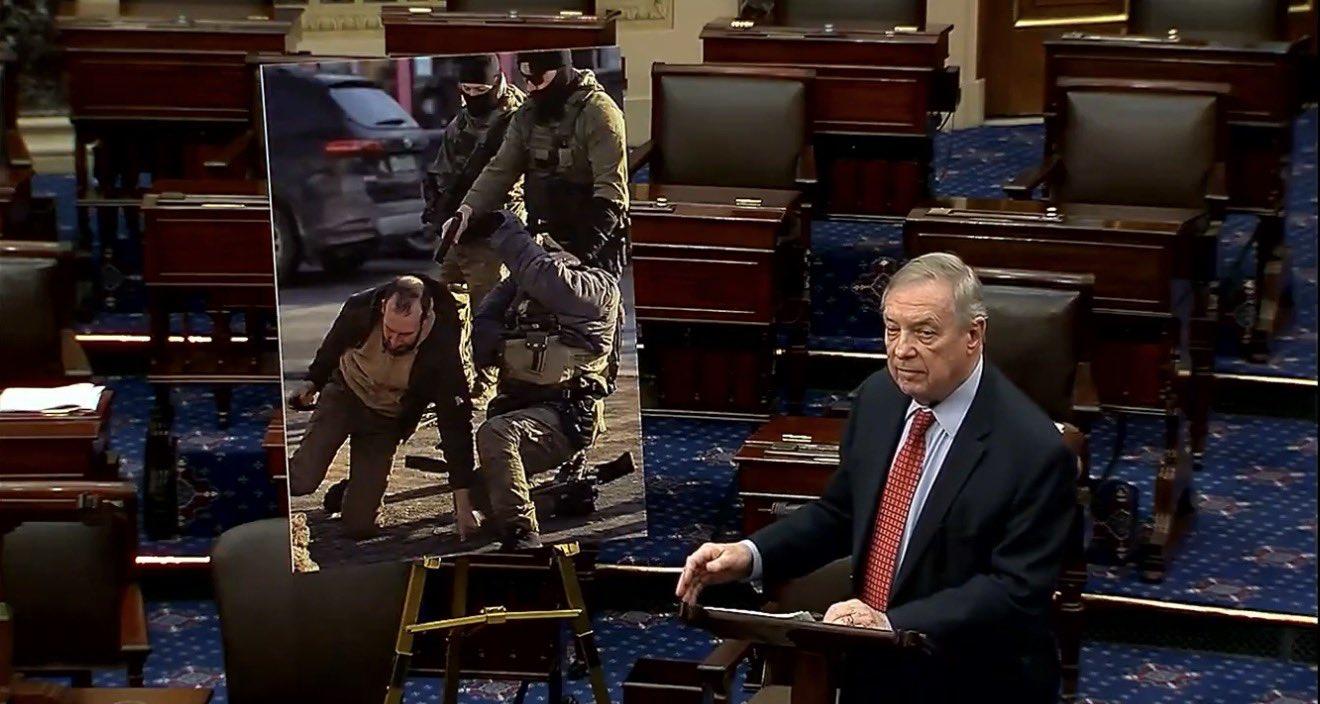
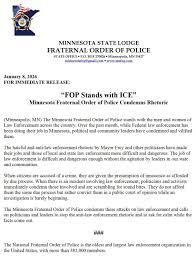
Yaron Brook recently read from and recommended this essay by Harry Binswanger on the ICE riots in Minneapolis.
https://harrybinswanger.substack.com/p/ice-vs-the-rule-of-law-not-of-men
I’d like to respond to it from an Objectivist frame of reference. By this, I do not mean that Ayn Rand’s word is automatically gospel, but that we should approach the conversation as if everyone involved is familiar with and broadly agrees with her. If you disagree with anything that she said then you should make your disagreement explicit and you should provide some very good arguments as to why you think you’re right.
Some of these things she never explicitly touched on. Many of them she did, though, and it’s profoundly demoralizing that such figures as Harry Binswanger and Yaron Brook apparently need to be reminded of it.
Quote
“When the police tell you to get out of your vehicle, you do,” they say. “If she had shown that proper respect for law enforcement, she’d be alive today,” some add.
I’m hearing these sentiments from people on my membership site (hbletter.com), people who welcome immigrants and condemn efforts to deport “illegals.”
Incidentally, this precisely describes my own position. I’m not convinced that ICE are the good guys - only that their opponents are the worse guys.
It’s not a long essay and it’s worth reading. He argues that ICE does not represent the rule of law, but the rule of men, and that it should be resisted. The real crux of it is here:
Quote
To make vivid the real meaning of this whole set-up, imagine that a Democratic president, operating with support from a Democratic Congress, raises the same hue and cry about income tax evasion that the Republicans have raised about criminal immigrants.
Suppose that this Democratic president sets up within the Internal Revenue Service a division of “Enforcement.” The IRS hires tens of thousands of tough guys to be armed, masked, and sent around the country to conduct raids on homes and businesses, looking for “tax cheats.” In the view of the IRS Enforcers, anyone with a big house, luxury automobile, or Rolex watch should be assumed to be a “tax cheat” and has to prove to the IRS Enforcers that he isn’t. And assume that the actions of IRS Enforcers are shielded from outside review just as the actions of ICE agents are now.
Is this too outrageous? The Left’s demonization of “millionaires and billionaires” closely parallels the Right’s demonization of immigrant hordes of “rapists and narcoterrorists.” Just as the charge of “tax evasion” is a cover for hatred of the self-made man, so the charge of “criminality” among immigrants is a cover for xenophobic fear of anyone who looks different (sorry, the Left is correct on that).
The only difference between ICE and the hypothetical IRS Enforcement division is that IRS Enforcement would keep its victims here, in its own Alligator Alcatrazes.
Now, what if some of these armed IRS Enforcers saw you in your car protesting them and ordered you to get out of your vehicle? What would you do?
You might obey, out of fear. You might obey to prevent violence, which you know would serve the goals of the Democratic president. Those are real, prudential considerations to weigh.
But I am raising the moral question: Would respect for the rule of law morally oblige you to obey the IRS Enforcers and get out of your car?
No. There could be no moral or philosophical reason to treat such “orders” with respect, to pretend that these IRS goons are “officers of the law.”
It’s worth noting that he doesn’t mention exactly what Renee Good was doing in her car beyond “protesting”. I believe Yaron Brook even skipped the phrase “protesting them” in that sentence, which made the omission too obvious to miss when I was listening to it.
The hypothetical I phrased to Mister Brook last week was “what if I parked my car in front of IRS agents to physically prevent them from collecting any taxes”, which is not quite the same as “in my car, protesting” let alone simply “in my car”. What this really ought to read as is:
Quote
The only difference between ICE and the hypothetical IRS Enforcement division is that IRS Enforcement would keep its victims here, in its own Alligator Alcatrazes.
Now, what if you parked your car in the middle of a street in order to prevent IRS agents from collecting any taxes, and the now-blockaded IRS agents ordered you to get out of your vehicle? What would you do?
You might obey, out of fear. You might obey to prevent violence, which you know would serve the goals of the Democratic president. Those are real, prudential considerations to weigh.
But I am raising the moral question: Would respect for the rule of law morally oblige you to obey the IRS Enforcers and get out of your car?
No. There could be no moral or philosophical reason to treat such “orders” with respect, to pretend that these IRS goons are “officers of the law.”
Now, I’m not going to argue that you should treat such orders with respect. Not at all. I’m simply going to point out where this argument leads.
Quote
[T]here is no justification, in a civilized society, for the kind of mass civil disobedience that involves the violation of the rights of others—regardless of whether the demonstrators’ goal is good or evil. The end does not justify the means. No one’s rights can be secured by the violation of the rights of others. Mass disobedience is an assault on the concept of rights: it is a mob’s defiance of legality as such.
The forcible occupation of another man’s property or the obstruction of a public thoroughfare is so blatant a violation of rights that an attempt to justify it becomes an abrogation of morality. An individual has no right to do a “sit-in” in the home or office of a person he disagrees with—and he does not acquire such a right by joining a gang. Rights are not a matter of numbers—and there can be no such thing, in law or in morality, as actions forbidden to an individual, but permitted to a mob.
The only power of a mob, as against an individual, is greater muscular strength—i.e., plain, brute physical force. The attempt to solve social problems by means of physical force is what a civilized society is established to prevent. The advocates of mass civil disobedience admit that their purpose is intimidation. A society that tolerates intimidation as a means of settling disputes—the physical intimidation of some men or groups by others—loses its moral right to exist as a social system, and its collapse does not take long to follow.
Politically, mass civil disobedience is appropriate only as a prelude to civil war—as the declaration of a total break with a country’s political institutions.
From “The Cashing-In”.
In essence, IF we accept the argument that ICE agents have no legitimate authority and that we ought to defy their orders on principle, THEN we must necessarily be at the political stage where rebellion or secession is necessary.
This is something a lot of people seem to miss when they reminisce about the Boston Tea Party, and how America was allegedly founded on the sanctity of “civil disobedience”. The Boston Tea Party (and all the civil disobedience leading up to the revolutionary war) were followed by a rebellion. And the right to revolt is something America is founded on.
You cannot have it halfway, though. You cannot say “yes, we should have mass civil disobedience, but not an actual rebellion”. It is one or the other. As Ayn Rand said in the Cashing-In, that is the only circumstance under which mass civil disobedience is appropriate.
And I do have a word of warning before everyone declares that now is the time to boogaloo. In Global Balkanization Ayn Rand also said:
Quote
If a province wants to secede from a dictatorship, or even from a mixed economy, in order to establish a free country—it has the right to do so. But if a local gang, ethnic or otherwise, wants to secede in order to establish its own government controls, it does not have that right. No group has the right to violate the rights of the individuals who happen to live in the same locality. A wish—individual or collective—is not a right.
So what kind of state do the ICE protesters wish to establish? If they were given a magic wand and allowed to have whatever sort of country they wished, what would they wish for?
Although they do not all agree with each other on everything, some broad consensuses are clear. They do see violence as a legitimate method of settling disputes - if you are or you represent someone who is “oppressed”. If you are fighting to uphold the rights of the rich, the strong, the intelligent, the able, the innocent or (as offensive as it is to add to this list, this is genuinely how they think) the white, forget it; you have no rights. They’re not big fans of logic or epistemological rigor. They are fans of doing, then feeling about the doing - again, so long as you’re not white; white liberals in the Twin Cities felt compelled to apologize for publicly displaying any of their own “white tears” in the wake of Good’s death.
In essence, they are the very same student rebels at Berkeley that Ayn Rand was discussing in The Cashing-In, only all grown up and with a few even nastier new developments.
Every single one of these people is a race-Communist.
So my word of warning is this. Before you decide that you’d like to fight alongside these people in a shooting war, take a vacation to the Twin Cities to meet them. I mean it. Think of it as a necessary pre-war act of reconnaissance. Come and talk to your potential confederates about what kind of society you’d like to see established after America, and hear what they have to say about it. Then, in light of the things you may learn from meeting these people, stop to reflect on whether now is really the time to boogaloo or whether it actually might be better to fight ICE through the properly established legal channels.
Do not give your moral sanction away blindly. If you do choose to give it to the ICE protesters, do it with the full knowledge of what you are supporting.