Original Sham – Rand and Nietzsche
I said the Original Sham was that death was not naturally inherent in life. A little-sister sham is misrepresentation in the thought that one’s death is one’s eternal nonexistence. The truth is that a nonexistent has no passage, no situations, and no character. Those are the fundamental categories of things in existence. Some traces of one’s existence from before its end—traces in existents continuing to exist, with their passage, situation, and character, beyond one’s own death—indicate to succeeding humans some of the particular passage, situation (and situating), and character that had been oneself. There is an eternal nonexistence of one before one lived and after one lived, but those do not belong to one. Talk of one’s eternal nonexistence is a lie if the eternity is insinuated to be something attaching to one or endured. Posters reading “Where will you spend eternity?” are a sham multiple times over.
Blaise Pascal (1623–62) famously formulates putatively rational arguments—which are known under the umbrella “The Wager Argument,” for why it is not irrational to believe in God.* Pascal first argues that because God would be without limit in Its nature, we who are finite, can know by reason neither the existence or nature of God. I should say such a conception of something, here labeled God, ensures that it does not exist. A thing without limit in its nature can be identically one with my axe and not identically one with my axe. Existence is Identity, as Rand would say. More specifically, and in terms of my own metaphysical categories, Existence is passage, situation, and character. The existent is not free of those limitations (as I have proven elsewhere). Further, if God is not conceived as a particular, indeed a concrete particular, then Its worth is a batch of empty words.
Should we allow Pascal, for the sake of further examination of his wager, his false premise that we cannot know by reason whether an infinite thing called God exists? No. His argument requires one enter a game-choice situation in which one is being invited to base belief on desirability of outcome rather than on grasp of fact. Rather, what should be done is this: set aside such morally disrespectful tom-foolery and find the truth. Virtue lies in aiming for truth, and we have gotten it (as surely as we’ve gotten that there are no contradictions in reality because we’ve gotten the Law of Identity): There is no such thing as God or anything supernatural and no such thing as eternal life nor any happiness, suffering, or perspective of one before one existed or after one existed. Nor is there an infinitely long period of non-existence attaching to one before and after one existed.
From Pascal’s Pensées:
Quote
§277
“ The heart has its reasons, which reason does not know. We feel it in a thousand things. I say that the heart naturally loves the Universal Being, and also itself naturally, according as it gives itself to them; and it hardens itself against one or the other at its will. You have rejected the one, and kept the other. Is it by reason that you love yourself?
§282
We know truth, not only by the reason, but also by the heart, and it is in this last way that we know first principles; and reason, which has no part in it, tries in vain to impugn them. . . . . For the knowledge of first principles, as space, time, motion, number, is as sure as any of those which we get from reasoning. And reason must trust these intuitions of the heart, and must base them on every argument. (We have intuitive knowledge of the tri-dimensional nature of space, and of the infinity of number, and reason then shows that there are no two square numbers one of which is double of the other. Principles are intuited, propositions are inferred, all with certainty, though in different ways.) And it is as useless and absurd for reason to demand from the heart proofs of her first principles, before admitting them, as it would be for the heart to demand from reason an intuition of all demonstrated propositions before accepting them.”
Pascal was a booster of the Original Sin idea. In §446 Pascal relays text he takes from a text he thought to be Jewish; it was really written by a Christian monk:
Quote
§446
“Of original sin. Ample tradition of original sin according to the Jews.
On the saying in Genesis viii, 21: “The imagination of man’s heart is evil from his youth.”
R. Moses Haddarschan: This evil leaven is placed in man from the time that he is formed.
And on Psalm lxxviii, 39: “The spirit passeth away, and cometh not again”; whence some have erroneously argued against the immortality of the soul. But the sense is that this spirit is the evil leaven, which accompanies man till death, and will not return at the resurrection.
And on Psalm ciii the same thing. [. . . has the Lord compassion on all who fear him. / For he knows how we were made, / he knows full well that we are dust.]
§552
Jesus is in a garden, not of delight as the first Adam, where he lost himself and the whole human race, but in one of agony, where He saved Himself and the whole human race.
§792
Jesus Christ . . . is come to the eyes of the heart, which perceive wisdom!”
Nietzsche does not throw Pascal’s faculty of “heart” out the window. He throws philosophy without such faculty out the window.
“Carefree, mocking, violent—this is how wisdom wants us: she is a woman, all she ever loves is a warrior” Nietzsche writes (GM III, §1, 68). For Nietzsche, finding truth is a ravishment, with the press of perspective that requires. The possibility of an objective standpoint for metaphysics and morals, such as Rand’s standpoint, is out the window.
Nietzsche and Rand rejected the supernatural and, along with it, traditional stories on the origin and mortality of human life. The natural and plain view, when supernaturalism is set aside, would be, I say: a person’s self being identically a living process, when an individual dies, it is the complete end of that individual, that self.[1] Notwithstanding his naturalism, Nietzsche comes up short of admitting the absolute, complete finality of the end of one’s one and only sequence of episodes of life, the life engaging one last week, yesterday, and at this moment. I’ll return to this in the sequel.
Rand takes religions to contain some amount of mysticism, and that seems correct to me. In her Atlas Shrugged, she takes religious folk to be “mystics of spirit.”[2]
Quote
When you listen to a mystic’s harangue on the impotence of the human mind and begin to doubt your consciousness, not his, when you permit your precariously semi-rational state to be shaken by any assertion and decide it is safer to trust his superior certainty and knowledge, the joke is on both of you: your sanction is the only source of certainty he has. The supernatural power that a mystic dreads, the unknowable spirit he worships, the consciousness he considers omnipotent is—_your_s. (Rand 1957, 1044)
In my experience, that picture by Rand of what is going on in the heads of mystics is a poor fit with what is going on (I say in part from my own case). The mysticisms I’m much acquainted with are those holding as part of their faith the Genesis story of the origin of the earth and humans. Probably those were also the faiths most familiar to Rand. She evidently understood, correctly, that much mysticism is planted in the minds of children (see her next paragraph), but she imputes lack of critical, independent mind in the child, as in the adult, to a failure in choices. “Faith in the supernatural begins as faith in the superiority of others” (ibid., 1045). Applied to a first-grader, that is an equivocation on the word “faith.” It is a fact rationally known to the child that the knowledge of adults is superior to her own knowledge. Applied to an adult in the audience of a Billy Graham crusade at the time Atlas Shrugged was published, yes, then the word “faith” is used in constant voice in that statement: a willful suspension of one’s critical independent rationality, thereby aligning with the views of others. I should add, however, that a man getting “saved” at the crusade was able to change his belief about the world and his situation in it only because of the ability of humans to let (to some extent) their beliefs be taken on board by some overriding feelings and wishes, which is intellectual dishonesty and a malfunction of mind.
Rand is mistaken in taking placement of other minds above one’s own authority as the root of mysticism of spirit. What will be the content of a mystic’s belief will have been contoured by sermons and childhood indoctrinating stories, to be sure. But the root of all mysticism of spirit is hard-mystic experience. That is a solitary thing. It can spring from miscreant brain states and can be set to holding in abeyance primal fears of absolute annihilation at death. Such a solitary experience was pivotal in the life and mind of Pascal (Hawton 1952, chap. III).
One is blameless for accepting mystical beliefs, such as Original Sin, in childhood from one’s elders. In adulthood one is intellectually capable and responsible, and, due to one’s love of God and one’s love of any other faith-imbued family members, one is intellectually courageous to disabuse oneself of such beliefs and the method of faith. Einstein’s childhood religious faith ended abruptly at age twelve. I was eighteen, and the shift was likewise abrupt. No doubt it came to me with my growing background in modern science, but the explicit thought was elementary: Is it possible the universe is just holding itself up, just existing, without assistance from anything supernatural, namely God?—parallel the earth holding itself up without a character such as Atlas? This was somewhat before I began to read Ayn Rand. As soon as I allowed the question to come seriously before my mind, I conceded the affirmative, indeed the actuality of the possibility (and felt a great cleanness, followed by feeling a great benevolence towards all mankind).
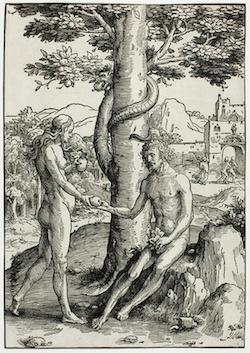
Rand draws attention to some elements of the Garden of Eden story in its Original-Sin overlay that are profoundly false and morally perverse. Nietzsche rates highly, in some respects, the mindset of Pascal, as we have seen. Nietzsche rejects, however, the supernatural and the notion of Sin. He sees Pascal as of noble soul, but crushed by “the Christian understanding of the weakness and depravity of man” (Pippin 2010, 10).
To be continued.
Notes
[1] Likewise for the species: When the last members needed for reproduction die, the species is ended absolutely, left to nature.
[2] Close kin of mystics of spirit would be the idealists in metaphysics from the traditional spectrum idealist-realist-materialist, as well as epistemological skeptics.
References
Hawton, H. 1952. The Feast of Unreason. London: Watts.
Nietzsche, F. 1887. On the Genealogy of Morality. C. Diethe, translator. 2017. Cambridge: Cambridge University Press.
Pascal, B. 1662. Pensees. W.F. Trotter, translator. 1958. New York: Dutton.
Pippin, R.B. 2010. Nietzsche, Pychology, and First Philosophy. Chicago: University of Chicago Press.
Rand, A. 1957. Atlas Shrugged. New York: Random House.