The Value of Colonizing Mars

9 hours ago, tadmjones said:

I wonder if given the parameters of solar activity and its interplay with galactic radiation and the varying benefits of differences of thickness of the theoretic cladding , if there won’t be engineering in mind of interchangeable ‘cladding’ systems.

’Tow’ some extra cladding and apply when needed and then shed when it is more beneficial for thinner cladding. As obviously necessary as radiation protection is needed, isn’t still the largest hurdle to over come a means of food production or hauling capacity ? I think I’ve seen mentioned that radiation protection will be presumably ‘figured out and engineered’ well before the food issue.

To save mass, instead of cladding the entire ship with the idea humans should be able to run around essentially naked  everywhere inside… designate only a small percentage of ship for “relaxation” areas (where people can wear jammies and slippers) and the rest of the ship requires full protection of specially designed radiation (but not pressurized) suits.

Of course sensitive electrical and other equipment will need proper shielding… and the greenhouse/chicken coup as well.

1 Like

On 5/24/2021 at 11:57 AM, Doug Morris said:

If the terraforming will eventually greatly increase the value of the stock, then to that extent the stock becomes a long-term investment which may be of value to people who are trying to provide for their descendants or for some cause they consider worthy.  This may increase the current market value of the stock.  A key question is how big this effect is.

The long-term investment may also be of value to organizations that have longer life expectancies than individual people.

1 hour ago, Doug Morris said:

The long-term investment may also be of value to organizations that have longer life expectancies than individual people.

I hear you, however, the ultimate and entire moral and economic purpose of a Corporation is the interest of the shareholders, who are the owners.  The owners themselves are individual people with finite life spans. 

Ownership means their individual interests are paramount… at least it would in a moral society.


So in the end, although there may be no foreseeable end date for an entity such as a corporation, and although long term flourishing of the corporation is in the long term interests of the owners, that long term cannot be so far outside the range of human life that the individual shareholders will not be the beneficiaries of that which they own. 

The owners are not morally held to sacrifice their own individual interests to future generations.  Any savings, or investments, or any other action a corporation takes, must be to the benefit of and intended to accrue to the current living shareholders, or as the shareholders voluntary designate, their beneficiaries, assigns or transferees, etc. 

4 hours ago, StrictlyLogical said:

Corporation

If the organization is a nonprofit, it might be different.

Long-term considerations can also affect current stock price, as I explained above.

On 10/15/2021 at 8:42 AM, StrictlyLogical said:

To save mass, instead of cladding the entire ship with the idea humans should be able to run around essentially naked  everywhere inside… designate only a small percentage of ship for “relaxation” areas (where people can wear jammies and slippers) and the rest of the ship requires full protection of specially designed radiation (but not pressurized) suits.

Of course sensitive electrical and other equipment will need proper shielding… and the greenhouse/chicken coup as well.

From what I gathered from the link , the cladding would need to be centimeters thick(?) , that’d be a heck of a suit, no ?

And it seemed there are certain properties of the radiation that create secondary particles(?) that are dependent on angles of incidence and shape. I think all and all the engineering should incorporate the value of human creature comfort as foremost , it’s a long ride :slight_smile:

20 hours ago, tadmjones said:

From what I gathered from the link , the cladding would need to be centimeters thick(?) , that’d be a heck of a suit, no ?

And it seemed there are certain properties of the radiation that create secondary particles(?) that are dependent on angles of incidence and shape. I think all and all the engineering should incorporate the value of human creature comfort as foremost , it’s a long ride :slight_smile:

Hmmm perhaps the definition of inside and outside could be tweaked.  All areas that can be designated outside, require minimal maintenance (space walking) could simply be open to vacuum and radiation.  Only areas with continual human presence would be shielded and pressurized.

On 5/6/2021 at 4:10 PM, MisterSwig said:

Is colonizing Mars a good or bad idea? For whom is it good or bad? Why is it good or bad?

Was colonizing the Americas a good idea? Certainly, it was good for the colonists (or else they wouldn’t have come) and not so good for the natives (who’d never been exposed to smallpox before), and I’d argue that the primary beneficiaries of that decision weren’t even alive at the time it was made.


Without the thirteen colonies there would have been no American revolution, the intellectual products of which are still benefiting almost everyone on Earth.


In the long run Bezos’ idea is probably closer to the exact shape such colonization will take.

I doubt we’ll see much actual terraforming happen once we establish some real space industry. It’d be much simpler, quicker and cheaper to set up rotating orbital habitats for our surplus population to live on, and save the surface of the actual planets for mining and heavy industry. Even without any zoning regulations (which would be ideal) that’s simply the most cost-effective solution.

Either scenario would be good for humanity, though; particularly for those countless trillions who haven’t been born yet.

On 5/6/2021 at 5:01 PM, Easy Truth said:

After all, if China or Russia does it, it would be bad for NATO (according to NATO).

Only if China could maintain its authoritarian model over such distances. History suggests otherwise.

That’s the beauty of any frontier.

1 Like

On 5/7/2021 at 6:56 PM, MisterSwig said:

Yeah, I see another problem with the Everest objection. I doubt they will place the Mars colony on a mountain of rock and ice that gets pummeled by high winds and snowstorms most of the year. They will have to contend with extreme cold though, and of course the oxygen problem.

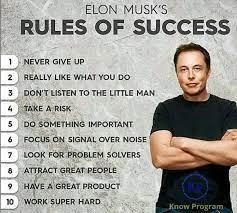
There was a news story I read about Musk many years ago. Some reporter was being given a tour of the SpaceX factory and asking about Musk’s policy of mandatory six-day workweeks, to which he simply laughed “yeah; we’ve gotten soft”.

I could not agree with that more. We, as a society, have gotten very soft and cozy and fat.

But there are still people who would be up for such constant dangers, and they probably would be capable of dealing with most of them.


The people who start listing off the hardships of space travel as a valid reason to abandon it, aren’t cut out for it. Those who are don’t see the hardships as a valid reason not to do it.

On 5/7/2021 at 6:56 PM, MisterSwig said:

If they rely on ice in the soil, won’t they eventually be forced to travel further and further away from the city to mine for ice? At some point each citizen might have to spend all day producing his own water ration.

Certainly, if all Martian trade gets cut off from Earth before any trade develops with the rest of the Solar System.  A goodly chunk of the mass of our solar system is H2O (almost all of which is frozen ice, which only needs a bit of heat).  But yes; in the first few decades after a Martian colony is established, life there will become very difficult if they get cut off from all conceivable ice trade.

On 5/22/2021 at 6:21 PM, happiness said:

I don’t see a great deal of rational value in reaching Mars at this point; we’ll all be long dead before any kind of industrial civilization is possible there.

Imagine if Christopher Columbus had said such a thing!  Or Isaac Newton!!!

“You know, as cool as it is that the same forces which cause apples to fall from trees are also likely responsible for the motions of our moon and all other celestial bodies, what does that do for Medieval Spain or Portugal?”

MMMH.  I’m sure I’ll have a word for that attitude by tomorrow morning.  In the meantime let me state my extreme disagreement, and that I think ANY great thinker (not just Ayn Rand but ANY of the greats of the last few centuries) would’ve found it equally repugnant.

On 5/23/2021 at 10:55 AM, MisterSwig said:

Colonizers might have to live in biodomes for eternity.

Potentially; yes.  Which is why it’d be much more cost-effective to simply use such materials for orbital habitats, where we can directly control the atmospheric content, gravity, and everything else pretty cheaply.  Although I’m sure there will always be the odd billionaire or trillionaire who opts for a true house on Mars or Venus.

On 5/23/2021 at 4:03 PM, StrictlyLogical said:

When could it be possibly rational for you to contribute your money/wealth to something like that?  Does it matter if you have children?  Could it be rational if thinking about a future after you are gone gives you some kind of mental fuel?

PRECISELY SO!

On 5/22/2021 at 6:21 PM, happiness said:

I don’t see a great deal of rational value in reaching Mars at this point; we’ll all be long dead before any kind of industrial civilization is possible there. I’d have more respect for Musk if he focused on improving life on Earth. Then again, maybe a new age of Colonization and Martian revolution is the future counterpart of the American revolution.

Quote

We are voyagers summoned by the gods

Of this mighty ocean to come

We take up The Good Challenge

Get ready!

There is land up ahead

A bird in flight to take us there

This beautiful land

The one I’ve been looking for

We will make our home here

We read the wind and the sky when the sun is high

We sail the length of the seas on the ocean breeze

At night we name every star

We know where we are

We know who we are, who we are

IDK.  I’ll actually have a coherent point about that in the morning.

On 5/22/2021 at 6:21 PM, happiness said:

I’d have more respect for Musk if he focused on improving life on Earth.

Oh, like how?  Like dealing with the alleged climate crisis?  Like dealing with the possibility of sapient AI (even though it’s not something most normal people are worried about yet)?  Like lowering the cost of launching mass into orbit to a point where it might be feasible for a regular person, or like creating countless high-paying jobs in the process?

I really don’t know if Elon Musk has ever read a word of Ayn Rand’s before, and frankly it doesn’t matter; he is the closest thing to a living, breathing Hank Rearden as has existed in this century.  And if you truly do have a pro-human mindset fully integrated into your self then you owe that man more respect than you’d give any other person alive today, including both you and I!


If you care about human life, and all which makes it possible (let alone worth living) then you owe him an apology for that statement alone.

It would appear that the next half century will be crucial in determining whether freedom lives anywhere on Earth.


It also seems that space technology, and its becoming more ubiquitous and accessible to pioneers, is critical for plan B: any escape from a One World Order to the great free expanse.


The next iron curtain that goes up will “surround” Earth itself, and the next space race will be between that curtain and free individual’s ability to leave and sustain ourselves elsewhere.


So in the sense of mental fuel I get from anticipating the welfare of my children, grandchildren, etc. going to Mars, and all the technology and infrastructure that would entail, for me, is good.  Although I can’t vote with my wallet for space tourism (I cannot afford it)… I’d donate a few clicks to and maybe buy some merch from a firm like SpaceX precisely because of this… and maybe Virgin Galactic as well.


1 Like

I think every century is crucial in determining an ‘aggregate’ level of freedom on Earth.

Post industrial revolution and with the emerging digital revolution and the technologies that come from them are what allows for more freedom to be gained and defended.

If off planet colonization ever happens it will most likely have to come from, be seeded by , collective action. The North American colonization was precipitated by wealthy stable regimes working to exploit fertile frontiers. The societies of individuals that recognized their advantage and relative power to break away from their former regimes created the opportunity for freedom to expand.

The amount of consumable capital that will need to be expended in developing frontiers in highly ‘in’-fertile frontiers boogles the mind , no ?

1 Like

4 hours ago, Harrison Danneskjold said:

Which is why it’d be much more cost-effective to simply use such materials for orbital habitats, where we can directly control the atmospheric content, gravity, and everything else pretty cheaply.  Although I’m sure there will always be the odd billionaire or trillionaire who opts for a true house on Mars or Venus.

If workers commute daily from orbit to the Martian surface and back and wear protective pressure suits the whole time they’re down there, we won’t need habitats on Mats at all.  If either of those is not feasible, we’ll need some sort of provision for habitable spaces on Mars.

SL,

Fifty or a hundred or two hundred years from now, supposing higher animal life not wiped out by nuclear exchanges, I do not think it likely at all that the earth would not be still divided into nation states, some at war with other countries or other earthly agencies of violence or in a civil war, and some of the nations still putting up walls to keep people locked in who would otherwise migrate to countries relatively more free for them.

During the first few years of the new century, the 21st Century, you’d hear people say things like “Can you believe this or that horrible thing is still going on in the 21st Century?” Well, yes, a lot of us are not surprised at all. It is true that scientific and technological advances in agriculture and in disease treatment and prevention are gradually making better life possible. And it looks like those advances will continue. But human nature remains basically the same, including criminal acts and wars, lust for power, and desire to be left free of aggressions. It is highly likely that wars will continue, and the world will not be united under one government in the manner of Levin’s This Perfect Day, in which all birthrates, lifespans, education and travel are centrally controlled, all lines and quantities of production and consumption are centrally dictated, and sectarianism does not exist (supposedly).

The world is not going to become so unified in state power to command no one travel to outer space were such migration to become feasible. Leaving aside such a world-wide prohibition, I anyway don’t think at all likely that outer space locations can be colonized such that a colony can become viable independently of earth, parallel the independence Paine urged as viable for the colonies here. Moreover, the population of a space colony would bring with it the human nature, including ideological diversity, it has on earth today.

What knowledge space exploration, manned or unmanned, brings back or arises from the R&D is power for humans on earth, and that’s potential for good here. By space exploration and otherwise, there are tremendous discoveries and inventions that are possible between our time and the great-great grandchildren. But just as computers and robots are servants of human interests, good or bad, space explorations will be servants of human interests on earth. Steps on earth are the spring and end of human “steps that travel unlimited roads.” Those unlimited roads and the freedom necessary to their actualization require ongoing wins of freedom here and there on earth, whose life forms (here) are the center of all known life and its struggles.

1 Like

1 hour ago, Boydstun said:

SL,

Fifty or a hundred or two hundred years from now, supposing higher animal life not wiped out by nuclear exchanges, I do not think it likely at all that the earth would not be still divided into nation states, some at war with other countries or other earthly agencies of violence or in a civil war, and some of the nations still putting up walls to keep people locked in who would otherwise migrate to countries relatively more free for them.

During the first few years of the new century, the 21st Century, you’d hear people say things like “Can you believe this or that horrible thing is still going on in the 21st Century?” Well, yes, a lot of us are not surprised at all. It is true that scientific and technological advances in agriculture and in disease treatment and prevention are gradually making better life possible. And it looks like those advances will continue. But human nature remains basically the same, including criminal acts and wars, lust for power, and desire to be left free of aggressions. It is highly likely that wars will continue, and the world will not be united under one government in the manner of Levin’s This Perfect Day, in which all birthrates, lifespans, education and travel are centrally controlled, all lines and quantities of production and consumption are centrally dictated, and sectarianism does not exist (supposedly).

The world is not going to become so unified in state power to command no one travel to outer space were such migration to become feasible. Leaving aside such a world-wide prohibition, I anyway don’t think at all likely that outer space locations can be colonized such that a colony can become viable independently of earth, parallel the independence Paine urged as viable for the colonies here. Moreover, the population of a space colony would bring with it the human nature, including ideological diversity, it has on earth today.

What knowledge space exploration, manned or unmanned, brings back or arises from the R&D is power for humans on earth, and that’s potential for good here. By space exploration and otherwise, there are tremendous discoveries and inventions that are possible between our time and the great-great grandchildren. But just as computers and robots are servants of human interests, good or bad, space explorations will be servants of human interests on earth. Steps on earth are the spring and end of human “steps that travel unlimited roads.” Those unlimited roads and the freedom necessary to their actualization require ongoing wins of freedom here and there on earth, whose life forms (here) are the center of all known life and its struggles.

The realization

that every individual’s contextual surroundings, metaphysically is becoming such that freedom to choose to live outside of a wrong society, outside of its grasping, oppressive, insipid, nanny-tyrant grip…into some pristine environment abundant enough to support a human life… not free from hard work but at least a free one … is fast disappearing… 

is existentially depressing.


A few centuries ago a free man could tell his village he wanted no more… and could leave… and if he ranged far enough, and was ingenious and productive enough, and with perhaps others of his ilk, he could make a living in supporting and sustaining himself and his family, and escape, if at least only for a while.  A totalitarian or a socialist might try to go after him, but perhaps they would stop at only chastising him as he left.  “Don’t like it here? Good riddance!”

Now, or very soon, there literally is no where to go

Nowhere to escape the many many hands, in our pockets, bedrooms, education, entertainment, speech, economics…everywhere…   “You’ll own nothing… you’ll all pay minimum wage and minimum tax or earn a minimum “living salary” have a minimum of health care and you’ll love it”…  I am disgusted and outraged beyond description at the insanity, which seems to march incessantly onward… the whole world is going from shirts to shirtsleeves.


Instead of escaping our enslavers, instead of walking away peacefully from a fight with our petty screaming redfaced despots next door… who know what’s best for us (and them), wielding that all mighty ballot box…

must we choose to fight forever or be enslaved forever?  sigh


So really true freedom comes again… when… in a few millenia?  Perhaps never…


I know will never see the day where I or my son, or my ancestors live in a truly free society… I will be taxed, redistributed, and redtaped into submission every day of my finite life.


Perhaps… there is after all an actual morality in escapism… morality in perhaps living in a video game, or with a belief in the afterlife … 

if death is all that can ever set me free..

perhaps a morality based on life is profoundly misguided.


1 Like

On 10/14/2021 at 2:33 PM, Boydstun said:

Dealing with radiation:

Optimal Radiation Shielding of Astronauts on a Mission to Mars

“Despite the relatively low fluxes of GCR particles, long exposure times to a constant background radiation of GCR can result in a significant radiation dose accumulated during the entire flight, resulting in dangerous biological effects. Shielding from GCR is a challenging task due to the high energies of the particles (Figure 1a). The high kinetic energies result in a high penetration ability and a large amount of energy being deposited in tissues and organs.”

Can someone explain to me why galactic radiation has presumably higher energy than solar radiation, when galactic radiation has traveled much further than solar has, before reaching us? What am I missing?

15 minutes ago, MisterSwig said:

“Despite the relatively low fluxes of GCR particles, long exposure times to a constant background radiation of GCR can result in a significant radiation dose accumulated during the entire flight, resulting in dangerous biological effects. Shielding from GCR is a challenging task due to the high energies of the particles (Figure 1a). The high kinetic energies result in a high penetration ability and a large amount of energy being deposited in tissues and organs.”

Can someone explain to me why galactic radiation has presumably higher energy than solar radiation, when galactic radiation has traveled much further than solar has, before reaching us? What am I missing?

The sun’s radiation is statistically typified by its specific nature, size, composition, temperature, etc. limiting the highest energy of the particles it can emit and limiting the probability of those med-high energy particles that it can emit

Other objects and events (some quite exotic) in the galaxy are far larger, more energetic, etc, so those particles are of much higher energy.

Recall photons are quanta of energy, so each photon from a weak gamma ray signal is still a gamma ray photon… just as energetic as any other gamma ray photon.

22 hours ago, Harrison Danneskjold said:

Was colonizing the Americas a good idea?

The problem with comparing the colonization of America with Mars is that America was not essentially different from Europe. European explorers had many excellent reasons to expect good things from the new land. Earthlings, however, know that Mars is essentially a barren wasteland. A Mars colony would be an unprecedented drain on Earth’s resources. Mars must become self-sustaining very quickly. Otherwise its mere existence will threaten life on Earth.