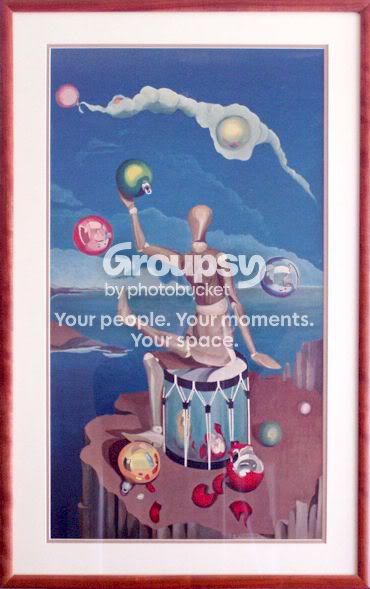
I’ve recently developed a taste for unconventional movies that discard narrative and intelligible plot to create a dreamlike, post-logical atmosphere that I can’t help but find fascinating. The best examples I’ve seen of such a style are Eraserhead by David Lynch and Gozu by Takashi Miike.
I don’t sense any philosophical malice or negative “sense of life” in these movies as Rand concretized in “No Skin Off Your Ass/Nose” from Fountainhead. If anything, these movies have an intellectually liberating effect by suppressing “sacred cows” that hinder innovation. If there is an anti-life message present, then it must be too subtle for me to pick up.
I’m also certainly not motivated to win the approval of a snotty in-crowd by appreciating surreal art.
However, by discarding conventions that are generally taken for granted as essential, are surreal movies no better than the random smearings of a Jackson Pollock-wannabe?
I also share your interest in surreal films, and would recommend checking out Ingmar Bergman’s Persona and Hour of the Wolf or Fellini’s 8 1/2. As for your actual questions, I will leave that up to others more familiar with the Objectivist theory of art. Not all surreal films deal with the same themes and motivations, so I don’t believe they can all simply be rejected based solely on their lack of a structured plot.
I don’t think Objectivism even recognizes surrealism as art. It’s certainly possible to like surrealistic movies, paintings, etc., but it’s not an art.
Art is a selective re-creation of reality according to an artist’s metaphysical value-judgments.
(The Romantic Manifesto)
I don’t think Objectivism even recognizes surrealism as art. It’s certainly possible to like surrealistic movies, paintings, etc., but it’s not an art.
Art is a selective re-creation of reality according to an artist’s metaphysical value-judgments.
(The Romantic Manifesto)
Wrong. Surrealism is art by Rand’s definition and criteria, and she loved some surrealist paintings, especially those of Dali.
J
1 Like
Rand may have loved it (though it surprises me to hear that), but that doesn’t make it an art. Surrealist paintings are at best pointless and free of value-judgement, and at worst they communicate relativism, inconsistency and irrationality.
Surrealist paintings are at best pointless and free of value-judgement
You are certainly free to hold such an arbitrary opinion, but it does not follow the evidence. Consider Rand’s favorite painting, for example. Or consider the simple fact that the people who make surreal art certainly had a point in doing so, and certainly incorporated their values into the work. Your statements are not based on anything.
Of course they had a point in making it, but a point or an idea is not enough. For their works to be considered art, they must also be able to communicate their ideas in a meanningful way.
For their works to be considered art, they must also be able to communicate their ideas in a meanningful way.
So then much of surrealist work is art, including Rand’s favorite painting.
Here’s a surrealistic painting by Rand’s husband, Frank O’Connor:
J
So then much of surrealist work is art, including Rand’s favorite painting.
How does a crucified Jesus on a leviating hypercube or a range of deformed pocket watches communicate anything meaningful at all?
How does a crucified Jesus on a leviating hypercube or a range of deformed pocket watches communicate anything meaningful at all?
On second thought, I guess tripod fish does make a good point. If he doesn’t get anything meaningful out of surrealist paintings, then they’re not art. It all depends on Objectivism’s answer to the question “To whom must a work of art communicate meaning?” To Rand? To tripod fish? To me? To the ordinary person, or to the exceptionally intelligent and sensitive person, or to the lowest common denominator? I think it’s clear that if a work of art didn’t communicate to Rand, then she denied that it was art, so perhaps the same should be true of all people: if any single person doesn’t get meaning out of a work of art, then it is objectively deemed to be non-art for all people?
J
if any single person doesn’t get meaning out of a work of art, then it is objectively deemed to be non-art for all people?
This criterion is obviously too strict as it would render everything non-art. The question is, is the perceived meaning the same as the meaning the artist seeks to communicate, does the meaning involve a selective re-creation of reality according to the artist’s methaphysical value-judgments, and is the meaning expressed in a clear and unambiguous way?
It is possible to find subjective meaning in and love even the the cloud patterns in the skies, yet it is not art. Neither is surrealistic paintings, movies, etc. in my opinion.
This criterion is obviously too strict as it would render everything non-art. The question is, is the perceived meaning the same as the meaning the artist seeks to communicate, does the meaning involve a selective re-creation of reality according to the artist’s methaphysical value-judgments, and is the meaning expressed in a clear and unambiguous way?
The question remains… to whom?
I wrote,
“…if any single person doesn’t get meaning out of a work of art, then it is objectively deemed to be non-art for all people?”
Tripod fish replied,
This criterion is obviously too strict as it would render everything non-art.
How can you say that it’s too strict, when it’s exactly the criteria that you’re proposing? You appear to be the single person who can’t get anything out of certain paintings and you are therefore declaring that they’re not art for anyone else.
The question is, is the perceived meaning the same as the meaning the artist seeks to communicate, does the meaning involve a selective re-creation of reality according to the artist’s methaphysical value-judgments, and is the meaning expressed in a clear and unambiguous way?
And how would you suggest that we discover the meaning that an artist sought to communicate if he’s not around to tell us, and if he left no writings or other indications to explain what he was doing with his art? By your proposed standards, nothing would qualify as art unless we had a detailed artist’s description against which to judge it.
It is possible to find subjective meaning in and love even the cloud patterns in the skies, yet it is not art. Neither is surrealistic paintings, movies, etc. in my opinion.
How can you say that they’re not art when you haven’t yet tried to discover if any surrealist artists left any explanations of their art’s intended meanings, or if you haven’t tried to discover if people other than you have successfully identified the intended meanings just by looking at the content of the work? Just because you admit to failing to find meaning doesn’t prove that everyone else has also failed.
J
The question remains… to whom?
I will say, to someone. It is technically possible for an artist to create a piece of art that is only meaningful to one human being in the world if there is only one person who has the capacity to recognize what is being re-created. Art is a form of information, and information only exists in the realm of conscious minds.
The artist is “someone”.
Alright, someone other than the artist, you pedant 
By your proposed standards, nothing would qualify as art unless we had a detailed artist’s description against which to judge it.
If the people to whom the work is aimed require the artist’s detailed description to judge what the re-creation involves and what metaphysical values it reflects, then it’s not art in my opinion.
How can you say that they’re not art when you haven’t yet tried to discover if any surrealist artists left any explanations of their art’s intended meanings, or if you haven’t tried to discover if people other than you have successfully identified the intended meanings just by looking at the content of the work? Just because you admit to failing to find meaning doesn’t prove that everyone else has also failed.
This is true, I see that I was maybe too bombastic in my statement. It would be interesting to hear what meaning Rand got out of Corpus Hybercubus.
Alright, someone other than the artist, you pedant
That’s kind of second-handed I think. Why must the art be meaningful to someone else? Roark was not at all interested in satisfying the aesthetic appeal of other people if it wasn’t something that HE wanted to build.
That’s kind of second-handed I think. Why must the art be meaningful to someone else?
Because art involves communication between the artist and the audience. You may well have a good idea behind your brush strokes, but if the idea is not recognizable to the audience, then it’s not art in my opinion.
Because art involves communication between the artist and the audience. You may well have a good idea behind your brush strokes, but if the idea is not recognizable for the audience, then it’s not art in my opinion.
That’s not in Objectivism’s definition.