…can’t think of anything to add to that question (we all know what art and sports are, and what they’re for), so please go ahead and just answer it. Or ask for clarification, I’d be happy to try and provide it.
Off the cuff. Yes. Without knowing what you’re delving for, I would have to leave it at that.
My hypothesis: sport is art.
It’s a performance art, very close to dance; and, if you throw in the way fans follow the lives of their sport-heroes, there’s an element of drama too. WWF is staged plays.
17 hours ago, softwareNerd said:
My hypothesis: sport is art.
Intriguing perspective. Your supporting argument ties in well with much of the existential feedback available via listening to the background noise.
When the Tiger’s roared in '84, and while the details have long since been forgotten, they were the first, and only, World Series existentially experienced by yours truly. Having thoroughly enjoyed watching an electrician rewire a fuse box, a team of men install a retaining wall of Michigan boulders, and numerous other constructive projects by various trades, there is a sense of enjoyment in seeing the art of their different crafts being put into play. Categorize it as an appreciation of competence, if you must.
Sport is art? In a similar sense, the players are artisans, in which case their series of actions become the artwork. While better than half a lifetime has been spent without actively engaging in an interest in the past-times of athletes, characters like Mark Spitz and Micheal Phelps, or Tiger Woods and Serena Williams come to mind.
A special thanks to Nicky needs to be extended here for mussing up what I thought was a somewhat fairly well organized shelf.
On 7/25/2017 at 0:15 PM, softwareNerd said:
My hypothesis: sport is art.
It’s a performance art, very close to dance; and, if you throw in the way fans follow the lives of their sport-heroes, there’s an element of drama too. WWF is staged plays.
Well, wrestling is not really a sport, because it’s not a competition. So sure, wrestling is art. Just like dancers, the wrestlers’ goal is is to be aesthetically pleasing.
As for competitive sports, I can see how the creators of a sport could be considered artists, since their goal was to create something aesthetically pleasing. Even something as basic as a marathon is born out of the intention to create an aesthetically pleasing performance, for an audience.
And certain athletes, who are being intentionally “artistic” (a soccer star like Ronaldinho who was practically a dancer on the field, or, in baseball, someone who has a beautiful swing and is smooth on defense, like Robinson Cano) are celebrated based in part on aesthetic value (although even they are expected to achieve the more practical goal of winning, first and foremost). But most players don’t really care about how they look, they just want to win. They don’t try to look good doing it.
So, I think this is a valid suggestion, the competition is certainly happening in the context of art. The sport itself is art, even if most players can’t be considered artists (they’re craftsmen/artisans, like Greg said, rather than artists…but they’re part of a bigger thing, that IS art).
On 7/25/2017 at 8:09 AM, dream_weaver said:
Without knowing what you’re delving for
What I’m trying to figure out is why a great play on a baseball or soccer field (or in a race, like the Tour de France) elicits the same sensation in me as a great scene in a movie (for instance…movies aren’t the only art form I enjoy).
Is it because I’m not being discerning enough in my choice of entertainment (I’m too obsessed with sports, and don’t make enough effort to find and experience good art), or is it a valid reaction…is there something more to sports than what’s apparent?
And I think it’s working, the question is being answered. There is art in sports.
13 minutes ago, Nicky said:
And I think it’s working, the question is being answered. There is art in sports.
I think it’s valid to have two concepts (per Rand’s Razor that concepts are not to be multiplied beyond necessity): Art and Athletics. But I agree with your point that there are similarities. From the Lexicon entry ART:
By a selective re-creation_, art isolates and integrates those aspects of reality which represent man’s fundamental view of himself and of existence. Out of the countless number of concretes—of single, disorganized and (seemingly) contradictory attributes, actions and entities—an artist isolates the things which he regards as metaphysically essential and integrates them into a single new concrete that represents an embodied abstraction._
For instance, consider two statues of man: one as a Greek god, the other as a deformed medieval monstrosity. Both are metaphysical estimates of man; both are projections of the artist’s view of man’s nature; both are concretized representations of the philosophy of their respective cultures.
Watching a great athlete selectively hone certain physical skills to an extraordinary degree - as does a ballet dancer - is something that we can enjoy aesthetically. It’s no accident that the Greeks often sculpted athletes.
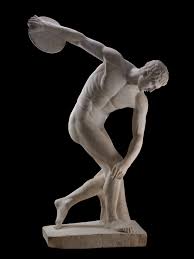
4 hours ago, Nicky said:
So, I think this is a valid suggestion, the competition is certainly happening in the context of art. The sport itself is art, even if most players can’t be considered artists (they’re craftsmen/artisans, like Greg said, rather than artists…but they’re part of a bigger thing, that IS art).
I guess they’re a bit like reality TV stars in some sense (to the extent we take reality TV at face value, and if we consider the “positive” genres like “Shark Tank” or perhaps even “Bachelorette”). In the sense that, at some level, for the actors themselves, this is not like the typical actor playing a role… it is actually their life. Yet, for the audience, it is art.
The initial reaction to reality TV is that it would be naturalism rather than romanticism, save for what editing and selective influences go on behind the scenes to what does finally get presented as the final product.
Sports may be a little more cut and dried. The selective recreation of reality comes from the rules of the game, and the training of the athletes to hone their skills. Yet, all the games of baseball, football, hockey, or soccer, etc., would be akin to going to the art gallery to just gaze at all the landscape paintings (baseball), or all of the bowl of fruit paintings (football), or if you insist on smears of paint on canvas that may titillate the senses with a cacophony of colors and arbitrary shapes perusing the abstract gallery (hockey). — (parenthetical groupings are not intended to imply correlation, rather just along an axis of categorical similarity.)
The merit may be in looking for the aesthetic value within the seeing the competence of the artisans at their trade, but does this warrant the logical leap to identifying sport as art? Where would the contradiction be that would arise from not accepting sport as art?
I suspect that some of the ambivalence I’m detecting in this thread comes from Rand’s seeming equation of aesthetics (or esthetics) with art: “The fifth and last branch of philosophy is esthetics, the study of art…”
I don’t believe that sports can be properly considered “art,” but they certainly have aesthetic value. A wider conception of aesthetics which encompasses more than art (including design, photography, “natural” beauty, etc.) allows for sports to be considered in this light without having to stretch the definition of art to meet it.
I enjoy both art and sports in their turn and I feel no reason to make apology for either; to answer the question posed in the thread’s title, neither art is better than sports nor sports better than art, as such, but they can be better or worse than one another in specific context, for a specific purpose. There’s a time for da Vinci and a time for LeBron. They both have value to offer.
I think art is better because it’s a product of the mind. While sport has a strategic element, it’s mostly genetically gifted specimens flexing physical abilities—that has a place, but it’s below art.
3 hours ago, dream_weaver said:
The initial reaction to reality TV is that it would be naturalism rather than romanticism, …
Don’t want to take the discussion away from sport, but Reality TV might be more Romanticism than many other average TV shows. If you take someones real life, and select only those times when they are consciously pursuing some value, or trying to deal with some situation/problem that has arisen, then you see people as volitional actors…not as pawns of reality. This aspect: humans as volitional beings, is the crucial razor in Rand’s concept of Romanticism. Reality TV puts this on steroids. Even if we might pooh-pooh the particular values being pursued, we are seeing volitional beings pursuing values. Not always, and not all the “actors”… but that variety of good and bad is also an element of good drama. I suspect that is why reality-TV is so popular: because it is a sneak Romanticism genre that upended more boring manufactured narratives.
3 hours ago, dream_weaver said:
…, all the games of baseball, football, hockey, or soccer, etc., would be akin to going to the art gallery…
Rather than art, I would relate it to dance. Here’s Rand, on dance, which Rand says “… presents a stylized version of man’s body in action”.
Rand ("Romantic Manifesto, Ch-4, Art and Cognition): “Every strong emotion has a kinesthetic element, experienced as an impulse to leap or cringe or stamp one’s foot, etc. Just as a man’s sense of life is part of all his emotions, so it is part of all his movements and determines his manner of using his body: his posture, his gestures, his way of walking, etc. We can observe a different sense of life in a man who characteristically stands straight, walks fast, gestures decisively—and in a man who characteristically slumps, shuffles heavily, gestures limply. This particular element—the overall manner of moving-constitutes the material, the special province of the dance. The dance stylizes it into a system of motion expressing a metaphysical view of man.”
Sport is pretty similar. Traditionally it has been male and could be thought of as symbolic physical battles, reenacting the essence of an aspect of physically-manifested heroism that was an important value for centuries. While retaining that element, some forms – like beach volleyball – stress human beauty too. And, as one gets to Gymnastics or Synchronized Swimming or could even debate if those are on the borderline between the two sub-genres of art: sport and dance.
2 Likes
Now I can’t shake the images of the athletes/r.s. tv actors ‘dancing’ on the field/tv screen.
1 Like
10 hours ago, DonAthos said:
A wider conception of aesthetics which encompasses more than art (including design, photography, “natural” beauty, etc.) allows for sports to be considered in this light without having to stretch the definition of art to meet it.
Yes. Aesthetics properly includes the study of how aesthetic experiences are at all possible in the first place. And aesthetic experiences can apply to all experiences.
As a demonstration, many have probably heard of synesthesia. I tend to believe that synesthesia should be subsumed under the broader concept ideasthesia. If you were asked to name the two figures below either ‘Bouba’ or ‘Kiki’, we would probably all name them the same way. This is a fascinating example of the cross-modal blending of senses and concepts, and this cognitive capacity lies at the root of aesthetic experiences. It includes visual, tactile, kinesthesia, audio - even how words are formed by the lips, etc. The sounds 'Ki" and ‘Bou’ are ‘sharp’ and ‘rounded’ respectively.

7 hours ago, New Buddha said:
Yes. Aesthetics properly includes the study of how aesthetic experiences are at all possible in the first place. And aesthetic experiences can apply to all experiences.
This is an important distinction I think. Sports for sure provide an aesthetic experience.
I think art, in general, is superior to sports in their importance. Art engages not only aesthetic experience, but the way you think of the world, and one’s cognition. So as far as survival (read: flourishing), art does more.
But just as diet matters to your survival, sports matter too. They engage other parts of one’s life that should not be ignored. A sportless life would be lacking. I don’t mean we all need to care or seek out sports equally, but we all need a little.
Also, I don’t think sports have to be our focus. To say that differently, competition is what counts. Competition focused purely on skill or personal features is important to a healthy society and healthy individuals. Competition brings out individual differences, more potential for differentiation, and more ways to see value in other people. Nietzsche had a take on this to see competition as a psychological strengthening, what makes a culture strong and able. But we can take a better spin on this to say that for sports especially, it’s displaying pride in mastery of one’s body and senses.
Examples of sports and competition as mastery:
Go requires high levels of focus and attention.
F1 Racing requires focus and quick response.
Soccer takes stamina and precise kicking.
Starcraft takes quick use of a mouse and precise clicks.
These are all admirable things. Observing these in competitions can provide great aesthetic experiences. For me, watching F1 does something, while NASCAR bores me. This isn’t far from how people react to art differently. But, the purpose is different than art.
21 hours ago, softwareNerd said:
Rather than art, I would relate it to dance. Here’s Rand, on dance, which Rand says “… presents a stylized version of man’s body in action”.
Ok. What was provided from this point on was a compelling parallel to considering sport as dance.
From the same chapter of The Romantic Manifesto:
Music is an independent, primary art; the dance is not. In view of their division of labor, the dance is entirely dependent on music. With the emotional assistance of music, it expresses an abstract meaning; without music, it becomes meaningless gymnastics.
What parallels the music? The following strikes a chord or two.
21 hours ago, softwareNerd said:
Traditionally it has been male and could be thought of as symbolic physical battles, reenacting the essence of an aspect of physically-manifested heroism that was an important value for centuries.
Is it the rules and/or the objective of the game that sets the ‘key’, the ‘time signature’, etc., upon which the athletes, by their dance in some way create the ‘melody’ or ‘tune’?
25 minutes ago, dream_weaver said:
What parallels the music? The following strikes a chord or two.
I don’t know, and I would not think there’s a parallel – I think one could come up with a metaphorical parallel, but I don’t see a reason to look for one “in real life”.
On 7/28/2017 at 0:01 AM, DonAthos said:
A wider conception of aesthetics which encompasses more than art (including design, photography, “natural” beauty, etc.) allows for sports to be considered in this light without having to stretch the definition of art to meet it.
I agree that things like architecture or product design aren’t art. Photography may or may not be. It is not really about the physical thing, but about the intent. So, even an architect or product designer may engage in art, by setting himself a different purpose.
Similarly, beauty and art are sometimes confounded, but ugly things can be great art. The Objectivist concept of art finds the CCD in the core intent of saying “look! this is life” or "look! this is the world:.
Spectator sport, in contrast to architect or design, is a form of art that serve the purposes of other arts, and is pretty close to dance. Modern sport, with all the money and advertising, also serve other purposes, but at its core – spectator sports are art.
I consider ‘beauty’ and ‘aesthetics’ to be very different concepts. The first subsumes all instances of beauty - flowers, patterns, human faces - while the second one refers exclusively to the field of art. Beauty is traditionaly considered to be a fundamental characteristic of art, but it’s neither its sole element, nor the main one. An exhaustive study of the phenomenon of beauty does not even begin to scratch the field of aesthetics.
Watching sports is an end in itself and a glimpse into man’s highest potential. In that sense it’s a metaphysical experience, just like art. But sport and art aren’t the only examples of metaphysical experiences. Watching a real-life hero succeed in a fight against evil can be metaphysical. Taking a walk around cherry blossom trees can be metaphysical, in the sense that it reminds you of the breathtaking beauty that is possible in life. In her novels, Ayn Rand mentions the pleasure of watching competent men do their job with superlative excellence.
The characteristic that distinguishes art from all other types of metaphysical experience (such as sports), is that an artwork is created by purposefuly selecting elements and integrating them into a coherent whole that conveys something about life. The artist’s toolbox is the whole of existence. You do not script and direct sport games, and even if you did, the amount of things a sports game can concretize is extremely limited, compared to an artistic medium like painting, literature or music.
A better genus you could assign to sport is ‘competitive game’. Ayn Rand described dance as a performance art, but she hastily added that the thing that’s being performed is the music. There is no music score, dramatic script or poem being performed in a tennis game.
To answer the thread’s question: if emotional fuel is the standard of comparision, art is definitely superior to sports. My reasons can be found above.