On 10/21/2019 at 11:57 AM, whYNOT said:
On the other, one may turn to “Nietzschean egoism”: whatever I say goes.
I think this deserves some clarification. Nietzsche wouldn’t even say there’s a standard of value. It’s not that whatever you say goes, but that by acknowledging that in his view there is no standard of value to apply across all people, we end up with completely different ways of thinking and action than the usual “good and bad”. To him, saying your life as a standard of value would be subjugating yourself to some outside commandment or duty. At least, if you are what he calls new philosophers.
I’m not arguing for his view, though I am saying it helps support the idea that your individual life as a standard of value is mental gymnastics at best.
9 hours ago, MisterSwig said:
You don’t lose your standard simply because your ultimate value (your own life) sets a standard by which you evaluate your actions as good or bad. If your actions result in you continuing to live and flourish, then you can evaluate them as good.
Of course you would judge the actions within the context of your life as good or bad. But it doesn’t mean you used your particular life to set a standard. It doesn’t make sense to say that your ultimate value set a standard, because if the standard is objective, you wouldn’t be using facts unique to you and your life. The unique facts about your life are information that you take into account (like your education when deciding what career to pursue).
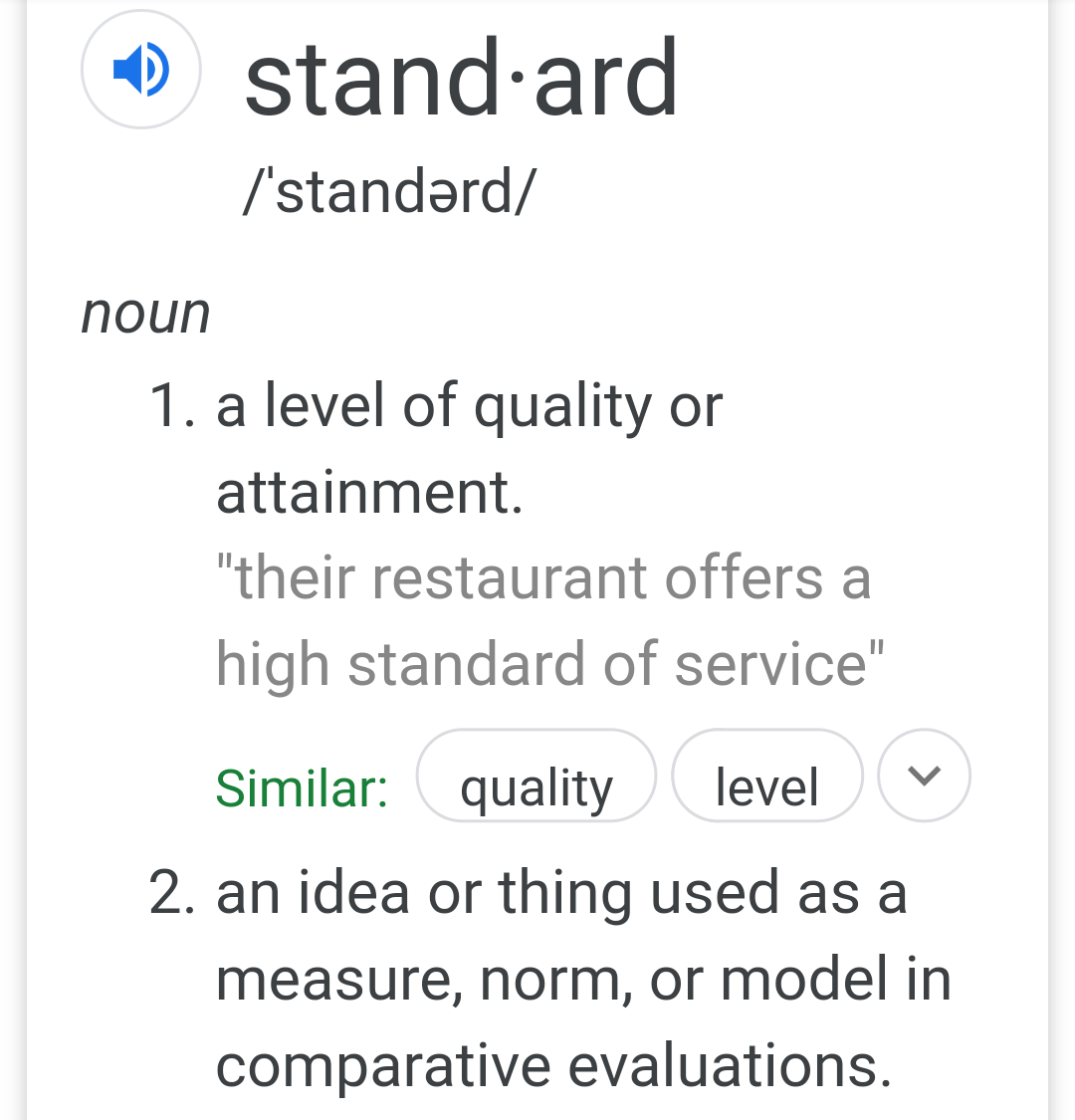
In other words, I think you’re confusing conceptual development with using measurements. Yes, your life is a critical referent. But you form the abstraction of a standard by abstracting away your particular life. Your life is there, part of the concept. If you didn’t abstract away your particular life, you wouldn’t be able to apply any moral standards to other people objectively. At best, it sounds like you’re trying to say that your life is your standard, because you have high standards for yourself, and you do it for your sake. But that’s just a shallow understanding, and there is good reason that Rand never tried to speak about standards in this way. You are using it as definition 1, while Rand was using 2.
Your life isn’t an abstraction. The closest thing to focusing only on that is how Max Stirner thinks of the ego. To him, he doesn’t talk about oneself being something we just think about, or frame of mind, or life having some intrinsic worth. Rather, our lives, our ego, is that concrete thing. When we say ‘I’, he doesn’t think of it as an abstraction, he sees it as a nameless thing that you can only refer to by pointing to it. The problem with this is that he doesn’t think we could abstract from our lives to reach objective moral principles. He doesn’t say this explicitly, but it is very clear when he spends a lot of time trying to refute the notion of an abstract self and life and therefore refute any way to apply abstract moral principles. But in fact, we can find abstract moral principles, because we can abstract away our individual lives.
The two definition idea only applies to say that your individual life could be called a standard in the sense of 2, even if normatively it should not be. We are discussing the normative level, since I’m not disputing whether your life could be called a standard. Basically, my claim is that it is easy to dismantle your idea. Your life can’t be applied as a standard to other people even if you tried, therefore, it can’t be a standard in the normative sense.